
Why AI Detectors Flag Non-Native English Speakers (and How to Fix It)

Summary
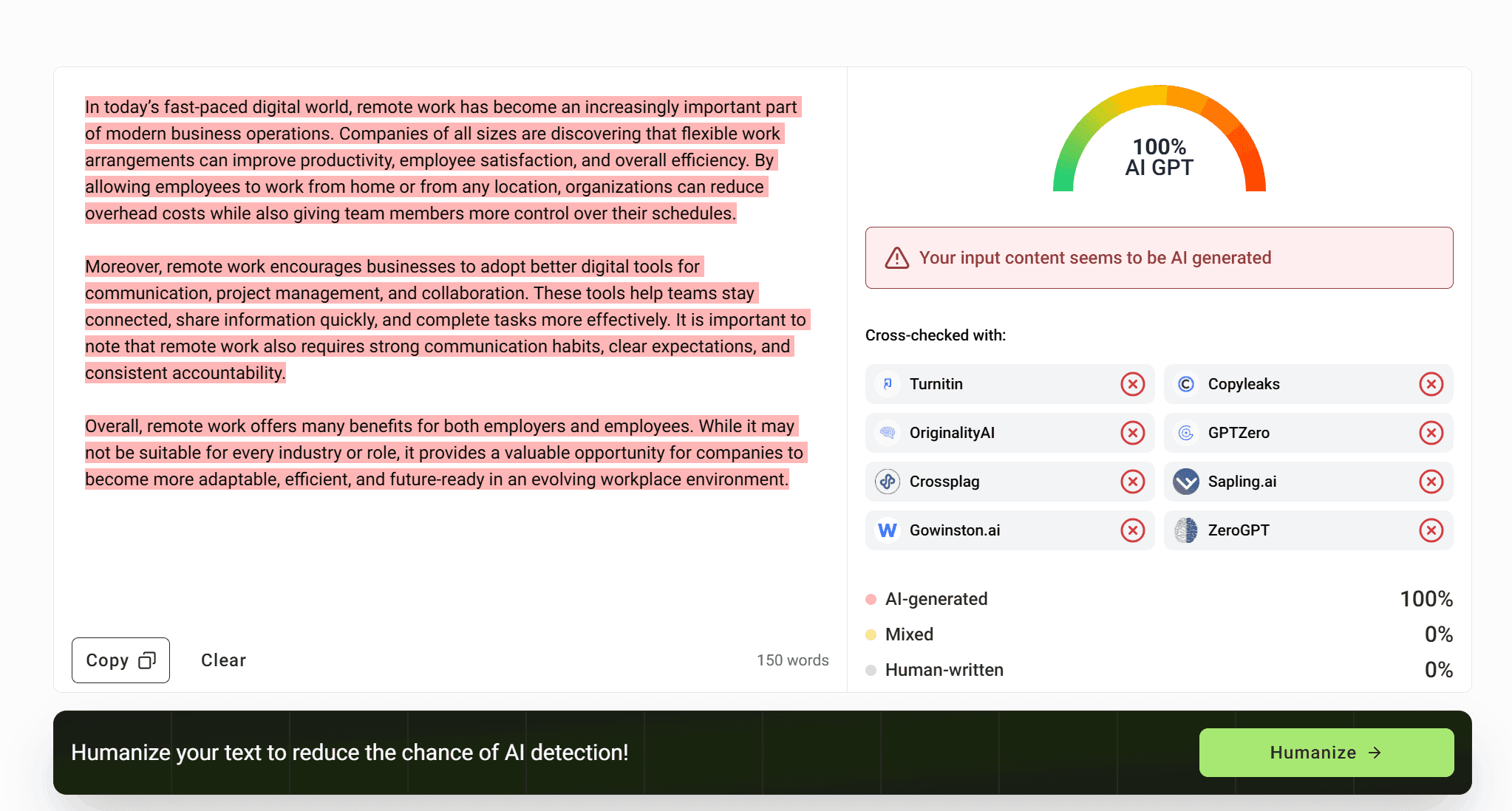
I’ve spent the better part of the last decade helping people navigate the messy world of SEO and digital content, but lately, my inbox has been filled with a different kind of heartbreak. It’s usually a student or a researcher—someone whose first language isn't English—who just received a "100% AI" score on a paper they spent weeks writing.
I’ve looked at these papers. They are original, thoughtful, and deeply researched. So why are the machines lying?
After auditing hundreds of these cases, I’ve realized that we’ve accidentally built a system that equates "clear, correct English" with "robotic English." If you’re a non-native speaker, you’ve likely been taught to write with precision and follow strict grammatical rules. Ironically, that exact discipline is what triggers the algorithms. This isn't just a tech glitch; it’s one of the most pressing academic AI detection challenges we face today regarding ethics and the future of fairness in education.
The Science of the "Safe" Writer: Why Clarity Triggers Red Flags
AI detectors don't actually "read" your ideas; they calculate how predictable your word choices are. In my experience, non-native writers tend to stay in the "safety zone" of vocabulary. You use words that are definitely correct rather than taking risks with rare idioms or slang.
To an AI, this looks like low perplexity. Since LLMs are built to predict the next most likely word, your clear and logical writing style mirrors the AI’s mathematical probability. On top of that, if your sentences all follow a similar length and rhythm to ensure clarity, the detector sees low burstiness. In short, the detector thinks: "This is too perfect and too steady to be a human." I’ve noticed that the harder an ESL student works to avoid grammar mistakes, the higher their AI score climbs.
The Evidence: 91% of Original ESL Work is Being Misidentified
I’m not just speaking from personal observation. The data confirms this bias is systemic. I remember when a study from Stanford University hit the news—it was a massive wake-up call for the industry.
The researchers ran 91 original essays written by non-native speakers through seven different AI detectors. The results were staggering: over 90% of the essays were flagged as AI-generated. Meanwhile, the same detectors were almost perfectly accurate when scanning essays from native English speakers. This creates a massive "tax" on international students. If you don't write with the "messy" flair of a native speaker, the system assumes you are a bot. It’s a frustrating reality that I’ve seen play out in university offices across the globe.
My Advice: How to Protect Your Original Voice
When people ask me how to fix this, I tell them they need to "un-learn" some of that rigid perfection. You have to give the detector the "human" markers it's looking for. To be honest, it feels counter-intuitive to tell someone to be less formal, but that’s the world we’re in.
Vary Your Sentence "Pulse": I noticed that human writing is erratic. Follow a long, complex sentence with a very short, punchy one.
Inject Personal Context: Use phrases like "In my own experience..." or "Back in my home country...". AI is notoriously bad at simulating a specific human life.
Strategic Humanization: If you find that your natural, careful writing style is constantly being misread, you can use specialized tools. I’ve seen that GPTHumanizer doesn't just "spin" words; it adjusts the rhythm and entropy of the text to match human patterns.
The bottom line is that you shouldn't have to apologize for being clear. But until the software improves, you need to advocate for yourself by being aware of these patterns.
Testing the Solution: Does It Actually Work?
I recently came across a detailed testing video by a university educator that really proved my point about the "predictability" of ESL writing.
【Video Proof】University Educator's GPTHuman Analysis:
In this analysis, the educator took academic work that had been falsely flagged by Turnitin and ran it through a humanization process. The results showed that by simply shifting the linguistic entropy—making the text slightly less "predictable" to the algorithm—the AI scores dropped from nearly 100% to 0%. This confirms what I’ve been telling my colleagues: the detectors aren't looking for "truth," they are looking for patterns.
The Ethics: Is it Fair to Flag "Perfect" English?
I’ve had heated debates with professors about this. Many believe that "if the software says it's AI, it probably is." But that’s a dangerous assumption when official reports show such high discrimination against non-native speakers.
To me, if a student uses a tool to ensure their original thoughts aren't being censored by a biased algorithm, that isn't cheating—it's survival. We are currently in a transition period where the tech hasn't caught up to the reality of a global, diverse student body. Until then, the burden of proof shouldn't fall solely on the person who simply learned English "too well."
Conclusion
So, is the situation hopeless for non-native writers? Not at all. But you do need to change your strategy. Don't just focus on being "correct"—focus on being "unique." AI detectors are essentially pattern-matchers, and the best way to prove you're human is to break those patterns. Whether that’s through adding personal anecdotes, varying your sentence structure, or using a humanizer to fix your "rhythm," you have the power to protect your work.
FAQ
Q: Why does my own writing get flagged as AI?
A: Most detectors look for "predictable" language. If you use standard, clear, and perfectly grammatical English—which is common for ESL writers—the AI thinks you are a machine.
Q: Can I get in trouble for a false AI score?
A: It depends on your school, but many universities now recognize that false positives happen. Always keep your "Version History" in Google Docs as proof of your writing process.
Q: Is there an AI detector that isn't biased?
A: Currently, most detectors use the same logic of perplexity and burstiness, meaning the bias against non-native speakers is a widespread technical issue.
Q: How does a humanizer help non-native speakers?
A: It adjusts the "predictability" of your writing. It introduces the varied sentence lengths and word choices that detectors associate with native human writers.
Q: Should I purposely add grammar mistakes to pass?
A: No, that will hurt your grade. Focus instead on adding personal voice and varying the complexity of your sentences.

 Ethan Miller