
NLP Algorithms for Syntax Refinement: Bridging the Gap for ESL Researchers

Summary
* Syntax refinement = structural clarity without meaning change, not vocabulary decoration.
* Parsing + GEC beats free paraphrasing when your manuscript has technical claims you can’t risk altering.
* A freeze list (numbers, citations, terms, hedges) is your safety net for reviewer-proof editing.
* Constrained neural editing is best for flow issues like clause order and sentence splitting, after local errors are fixed.
* AI “detection” is largely statistical style matching, so optimize for readable science, not for detector quirks.
If you’re an ESL researcher, syntax refinement can make you “native-clear” writing without changing your data, claims, or logic—if you use the right algorithms designed for meaning-locked precision edits, not generic rewriting.
I’ve tried this on a real draft in which reviewers didn’t hate the ideas, just the shape of the sentences. It’s not about clever words. It’s about cleaning up the syntactic layer (word order, clause structure, agreement) so the argument sits nice and clear. If you want the big context for why modern “humanizers” abandoned simple rewording in favor of full-blown neural editing, this quick piece on how neural editing replaced paraphrasing is the best mental model I’ve seen.
What “syntax refinement” means in academic ESL writing
Syntax refinement is rewriting sentence structure to ensure that text is clear and fluent while propositions remain identical. In practice, it means fewer tangled clauses, cleaner subject‑verb alignment, and less surprising patterns of information flow, without changing your data, numbers, or stance.
When I review ESL drafts, the same issues repeat:
● long noun stacks (“the model parameter estimation process method…”)
● clauses nested too deep
● agreement errors that make readers doubt rigor
A useful grounding here is Xiaofei Lu’s efforts on measuring syntactic complexity in L2 writing, operationalizing structure with a host of indexes like clause density and subordination, just the variables refinement algorithms end up tweaking in practice (see 14 indices of syntactic complexity).
The stance I’m taking
Don’t chase “fancier English.” Chase “lower friction reading.” That’s what gets you fewer reviewer comments and more accurate AI summaries of your work.
The NLP algorithms that actually move the needle in 2026
The best syntax refinement systems combine parsing + error modeling + constrained generation so edits stay local and meaning-safe. If a tool can’t explain (even implicitly) why it changed something, it’s more likely to drift your meaning.
Here are the algorithm families I trust most:
1) Syntactic parsing (dependency + constituency)
Parsing tells you what the sentence is doing (subjects, objects, modifiers). That’s how systems decide whether to:
● move a clause earlier
● split a sentence
● convert passive to active (when safe)
If you want a quick refresher that doesn’t feel like a textbook, the CS224N attention and parsing lectures are a solid watch and help you see why “structure-aware” edits beat random rewrites.
2) Grammatical Error Correction (GEC) as editing, not rewriting
GEC models are trained to fix what’s broken with minimal changes. One practical example is the tag-based editing approach in GECToR tag-not-rewrite approach, where the model predicts token-level transformations instead of generating a whole new sentence.
That design choice matters because it reduces “creative drift.” In academic writing, that’s the whole game.
3) Neural text editing with constraints
This is where modern systems get good: produce candidate edits, then filter them using constraints like:
● semantic similarity thresholds
● terminology preservation
● citation/number freezing
● “don’t touch hedges” rules (may, suggests, likely)
The tool doesn’t need to show you the constraints—but you’ll feel them when the output stops hallucinating.
Compare four approaches to “fixing English” (and what breaks)
Not all refinement methods are equally safe for research writing; the safest ones act like editors, not authors. If you’re handling abstracts, methods sections, or results, you want the smallest edit that solves the problem.
Approach | What it’s good at | What it risks | My take |
Rule-based grammar checker | obvious grammar, typos | awkward phrasing, brittle rules | fine for quick cleanup |
Paraphrasing / rewording | surface variation | meaning drift, citation/number damage | risky for research text |
GEC / tag-based editing | local grammar + syntax fixes | may miss higher-level flow | best “safety-first” baseline |
Neural editing + constraints | fluency + structure + consistency | can over-smooth voice | best when meaning is locked |
My default: start with editing-style systems, then apply constrained neural edits only where readability still hurts.
A workflow that keeps meaning unchanged (the reviewer-proof version)
The safest pipeline is “diagnose → edit locally → verify semantics,” not “rewrite everything and hope.” When people get burned, it’s usually because they skip the verification step.
Here’s the flow I use (works for abstracts and full manuscripts):
Flowchart (logic steps):
Draft → Freeze facts (numbers, citations, named entities) → Parse + diagnose (long clauses, modifier attachment, agreement) → Local edits first (GEC/tag edits) → Structure edits second (split/merge, clause reorder) → Semantic check (does the claim stay identical?) → Final human pass
What I literally “freeze”
● all numbers (means, p-values, CI, sample sizes)
● all citations and author names
● domain terms (genes, compounds, model names)
● hedging and causality verbs (correlate vs cause)
If a tool can’t respect this freeze list, it’s not a refinement tool—it’s a rewriting tool.
Where GPTHumanizer AI fits (without turning your paper into marketing copy)
GPTHumanizer AI is most useful when you treat it as a structure editor—tightening syntax, smoothing transitions, and keeping your argument intact. The value isn’t “sound more human.” It’s “sound more readable without changing substance.”
In my testing, the practical wins are:
● syntax normalization (fixing unnatural clause order common in ESL drafts)
● controlled sentence splitting (breaking one 45-word sentence into two clean ones)
● terminology preservation (not swapping your technical terms for “synonyms”)
The key is to run it where structure is the bottleneck—abstracts, introductions, discussion—then verify against your freeze list. That keeps it aligned with academic integrity and reviewer expectations.
Why “AI detection” is mostly style recognition, not logic recognition
The vast majority of AI‑text signals focus on statistical style patterns (predictability) rather than if your reasoning is correct, which means perfectly honest ESL polishing is still flagged and “sounding natural” can help dodge false positives.
One of the clearest research debates I’ve seen is how for all the stats, perplexity, burstiness, and so forth can become moot as new models rise and writing distributions collide (see perplexity and burstiness signals).
My opinionated takeaway:
● Don’t optimize for detectors. That turns into weird writing.
● Optimize for readers. Clear syntax and consistent terminology are what both humans and AI summaries reward.
And yes, this does impact “Search Everywhere” visibility. In 2026, the schoolmaster AI parsers do all the work, so if your abstract and top findings are ingested into an AI answer, clean syntax can help the AI parsers pull your true claim rather than a mangled version.
If you’re still flagged for “textbook-correct” ESL English, it’s not you being shady, it’s the detector’s bias toward predictable structure. I broke down the mechanics (and what to do about it) in why ESL writing gets flagged.
Wrap-up
Want publication-grade English as an ESL researcher? Pick NLP methods that act like editors, not authors. Parsing makes you structure-aware, GEC will keep you editing the few things you really need to change, constrained neural editing keeps flow intact, and a freeze list protects your science. My stance stays the same: better syntax isn’t decoration—it’s how you reduce reviewer friction and how you make your work easier to quote, summarize, and trust.
FAQ
Q: What are NLP algorithms for syntax refinement in ESL academic writing?
A: NLP syntax refinement algorithms improve sentence structure (word order, clause structure, agreement) while preserving meaning, usually by combining parsing, grammatical error correction, and constrained editing.
Q: Which NLP method is safest for preserving meaning in research abstracts?
A: Editing-style models (GEC or tag-based editing) are safest because they apply minimal, local fixes instead of regenerating entire sentences, reducing the chance of meaning drift.
Q: How can ESL researchers prevent terminology changes during syntax refinement?
A: ESL researchers can prevent term drift by freezing named entities, technical terms, numbers, and citations, then allowing edits only to function words, agreement, and clause structure.
Q: What is the difference between paraphrasing and neural editing for syntax refinement?
A: Paraphrasing rewrites freely, while neural editing targets specific structural changes under constraints, so neural editing is typically safer for academic claims and technical details.
Q: Why do AI detectors sometimes flag polished ESL writing as AI-generated?
A: AI detectors often rely on predictability-style signals rather than checking reasoning, so polished, regularized syntax can resemble statistically “smooth” machine-like patterns even when human-written.
Q: How does GPTHumanizer AI help with syntax refinement for ESL researchers?
A: GPTHumanizer AI can act as a structure-focused editor—smoothing clause order, splitting run-on sentences, and fixing agreement—without changing claims, when used with a strict freeze list and verification pass.

Related Articles
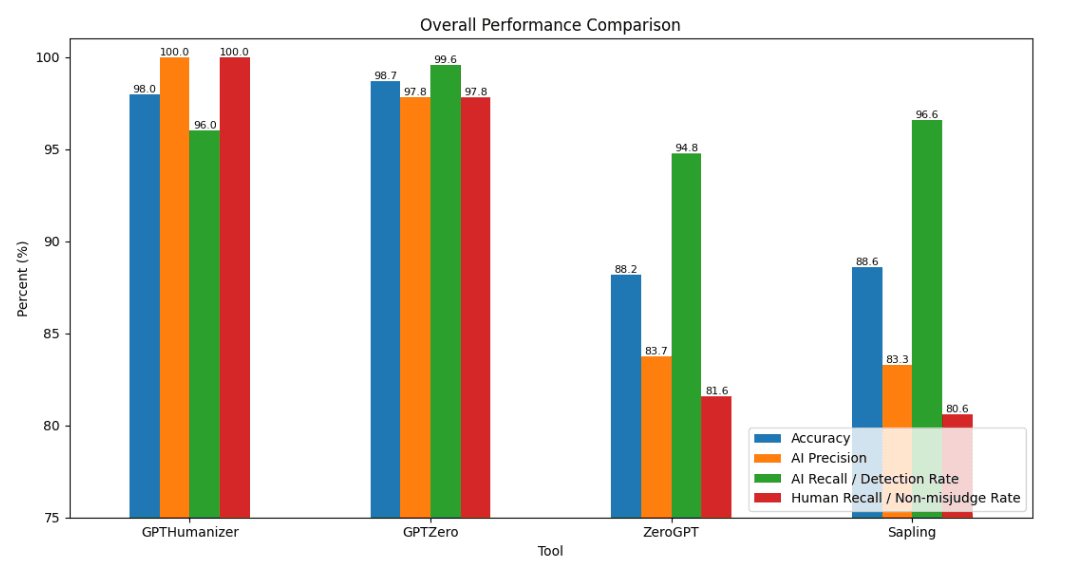
2026 AI Detector Benchmark: Can You Really Trust AI Detectors?
We tested GPTHumanizer, GPTZero, ZeroGPT, and Sapling on 1,000 English texts to compare AI detection...
 Ethan Miller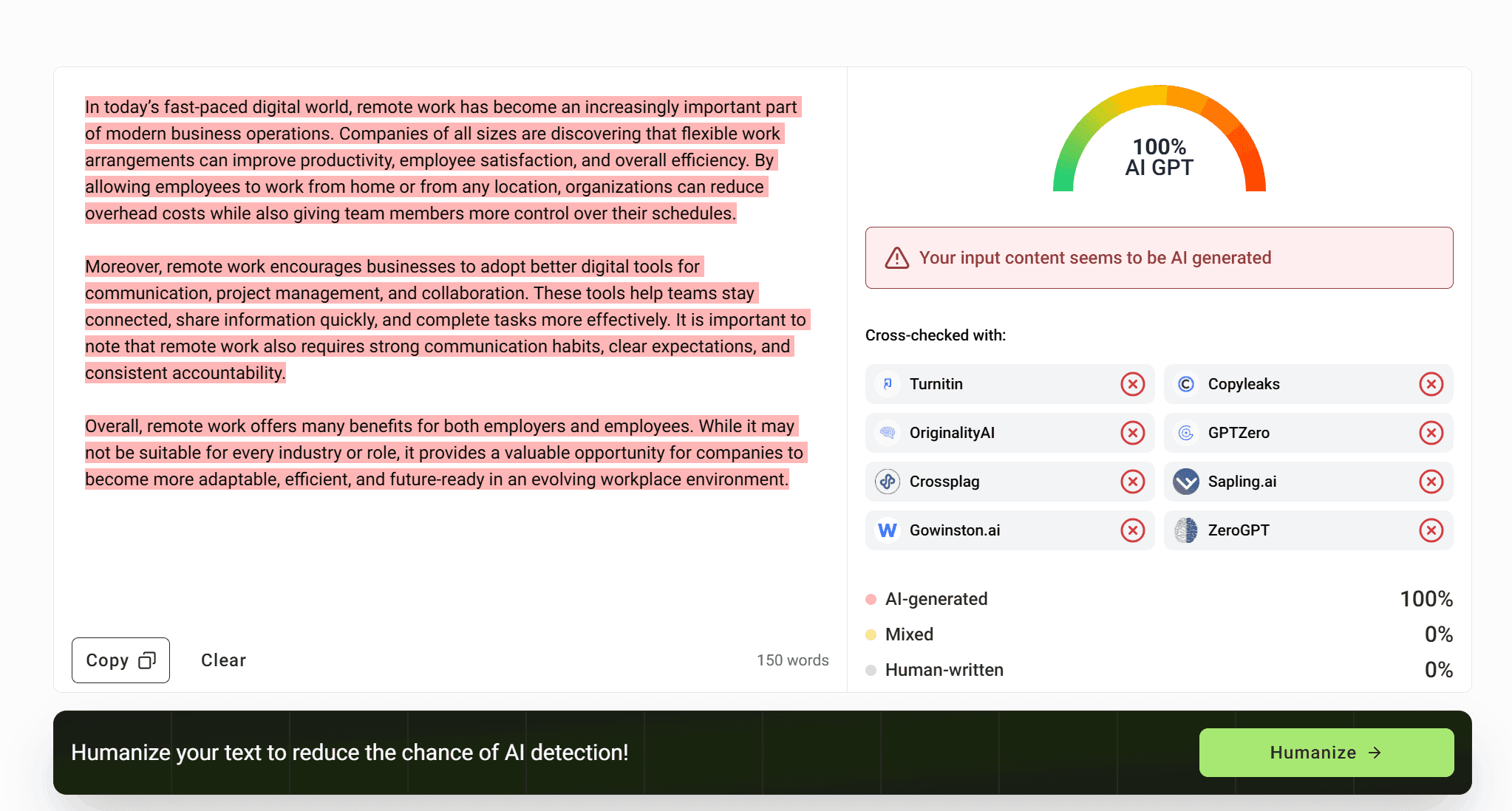
GPTinf AI Detector Review: Is Its Checker Actually Reliable?
GPTinf AI Detector review with real tests on AI text, human writing, GPTinf output, GPTHumanizer AI ...
Ethan Miller