
What to Do If You Are Falsely Accused of Using AI in College

Summary
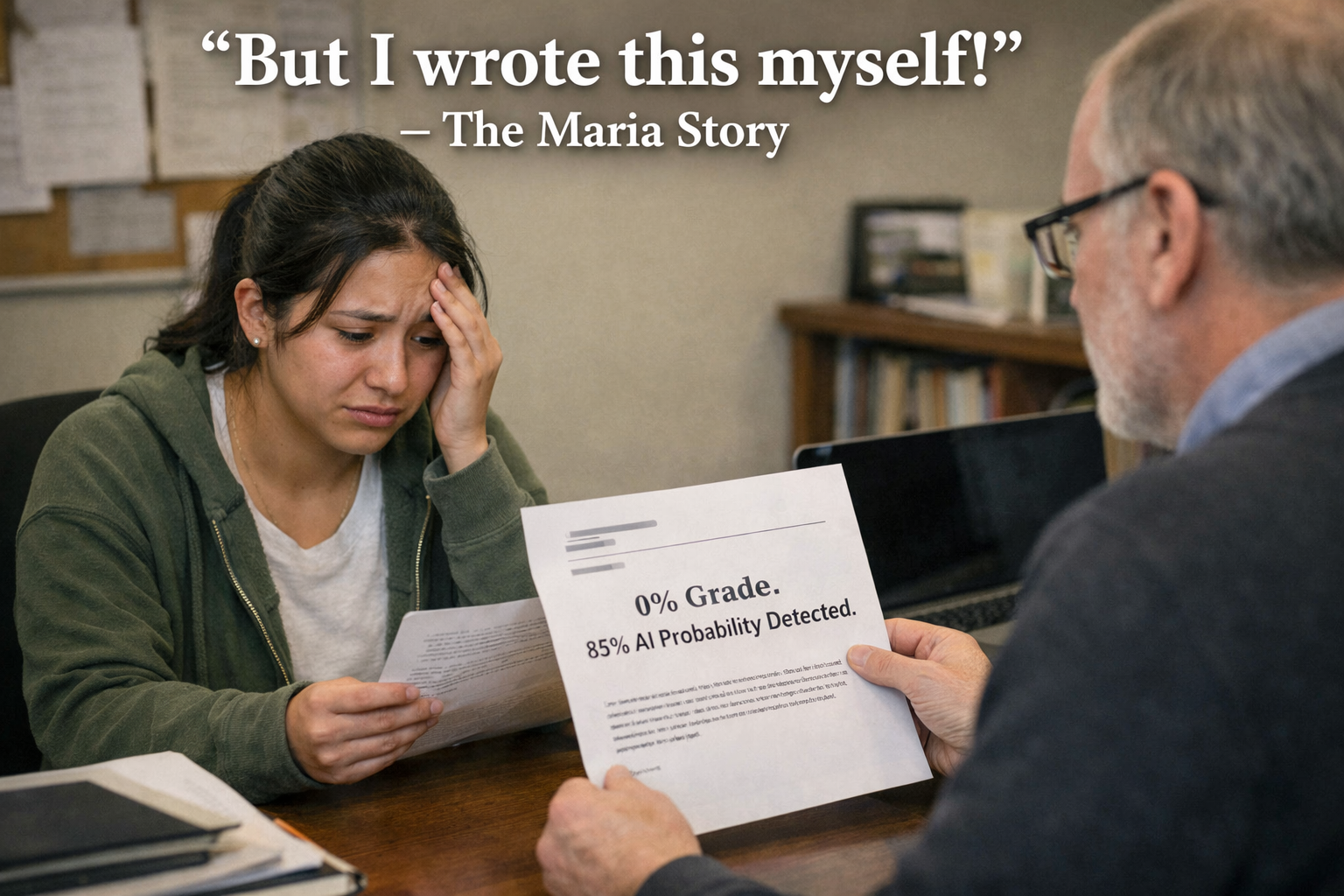
"But I wrote this myself!" – The Maria Story
Last semester, a student I’ll refer to as “Maria” came to my office shivering. She was a wonderful ESL (English as a second language) student that worked twice as hard as anyone else to get her grammar correct. She gave me a printed out email from her sociology professor: “0% Grade. 85% AI Probability Detected.”
Maria never used ChatGPT. She used Grammarly to fix her preposition issues, but the ideas were hers. Yet because her writing was spotless but structurally inflexible (common issue when writing a second language), the detector caught her.
We didn’t shout at the professor. We opened up her editing logs. We told her how long she spent on the file (12 hours). The grade was restored.
I’m telling you this because if you’re reading this, you probably find yourself in Maria’s shoes. It’s a scary place to find yourself, especially since the greater AI detection in academia is throwing up ethical questions for the future. But you can restore your grade. Here’s the exact playbook on how to prove your work is yours.
Step 1: Gather Your "Digital Paper Trail"
The only thing that beats an AI probability score is hard data. Your goal is to prove human effort over time.
If you used Google Docs, you have a golden ticket.
1. Open your document.
2. Go to File > Version History > See version history.
3. Take screenshots showing the timestamps.
What proves you are human?
● Time on Page: AI pastes text instantly. Humans write, pause, delete, and rewrite over hours or days.
● The "Messy" Middle: Show your professor the paragraphs you deleted. AI generators don't have "drafts"; they only have final outputs.
If you use Microsoft Word, enable "Track Changes" for future assignments. For now, look for previous save files or email drafts you sent to yourself.
Pro Tip: If you did your research in a browser, go to your Chrome/Safari history and screenshot the research trail from the dates you wrote the paper. This shows you were reading sources, not prompting a bot.
Step 2: The "Viva Voce" Defense (Talk It Out)
Don't hide behind email. Ask for a meeting. When you sit down, suggest a "Viva Voce" (an oral defense).
Say this:
"I understand the detector flagged this, but I assure you I wrote it. I can talk you through my research process and explain exactly why I chose this specific argument in the third paragraph."
Most professors rely on detectors because they don't have time to police everyone. If you can articulate your argument and the sources you used without looking at your notes, you prove you know the material. AI users usually can't remember the specifics of what "they" wrote.
Step 3: Understand (and Explain) Why False Positives Happen
You need to educate your professor without sounding condescending. The reality is, AI detectors are not looking for "robots." They are looking for low perplexity—sentences that are statistically predictable.
Academic writing is supposed to be formal, structured, and predictable. This is why tools often flag high-quality academic work as AI.
To protect yourself from future flags, you need to learn how to break these predictable patterns without sacrificing academic rigor. We have a complete guide on how to adjust your writing style to sound authentically human to US professors.
The Bias Problem:
The Bias Problem: This is especially tricky for international students. A study by Stanford researchers highlighted that GPT detectors are biased against non-native English writers, often misclassifying their work because their sentence structures are less "bursty." If you are in this situation, understanding exactly why AI detectors flag non-native English speakers is crucial to building your defense. Bring this data to your meeting to show that the "AI style" is often just "correct grammar."
Step 4: Verify Your Text with a specialized Tool
Sometimes, you need to fight fire with fire—but you need the right fire. Many free detectors are incredibly unreliable.
I recommend running your text through the GPTHumanizer AI's free AI detector before you submit, or using it to show your professor a counter-result. Unlike generic free tools that give a simple yes/no, the AI Detector by GPTHumanizer AI helps you identify which specific sentences are triggering the alarm.
Why use this tool?
● It distinguishes between "robotic phrasing" and actual AI generation.
● It helps you spot parts of your essay that might be too stiff so you can rewrite them with more personality before submission.
Note: Do not use tools to "trick" the system. Use them to audit your writing style so your human voice comes through clearly.
Step 5: How to Argue Your Case (Comparison Table)
When you meet your professor, the way you present yourself matters.
Weak Defense (Don't do this) | Strong Defense (Do this) |
"The detector is wrong! I didn't do it!" (Emotional) | "Here is the version history showing 15 hours of editing." (Data-driven) |
"I don't know why it says that." | "I tend to write in a structured, formal style. I believe this flagged a false positive." |
accusing the professor of being unfair. | Asking for an oral quiz on the paper's content. |
Unique Insight: The "Style vs. Logic" Gap
Here is something most people miss: AI mimics style, but it rarely mimics deep logic.
If you are accused, ask your professor to point out a logic error or a hallucination (fake fact).
● AI often invents citations or makes circular arguments.
● Humans make specific, sometimes messy, logical leaps.
If your paper has correct, real citations (that you actually read) and a unique point of view, point that out. "Would an AI know how to connect this obscure 1990 study to this modern event?" probably not.
FAQs: Common Student Anxieties
Can a professor fail me based only on an AI detector?
In many universities, the answer is now no. Due to the high rate of false positives, many institutions have disabled generic AI detection tools or stated that they cannot be the sole grounds for disciplinary action. Check your student handbook immediately.
Does using Grammarly to check spelling count as using AI?
It depends on the setting. Standard spell-check is usually fine. However, using "Generative AI" features to rewrite whole paragraphs can trigger detectors. Be honest about the tools you used.
What if I don't have version history if my essay was falsely accused of using AI?
This is harder, but not impossible. Gather your browser history showing the websites you visited for research. Find any handwritten notes or outlines. Even a chat log with a friend discussing the paper topic counts as evidence.

Related Articles
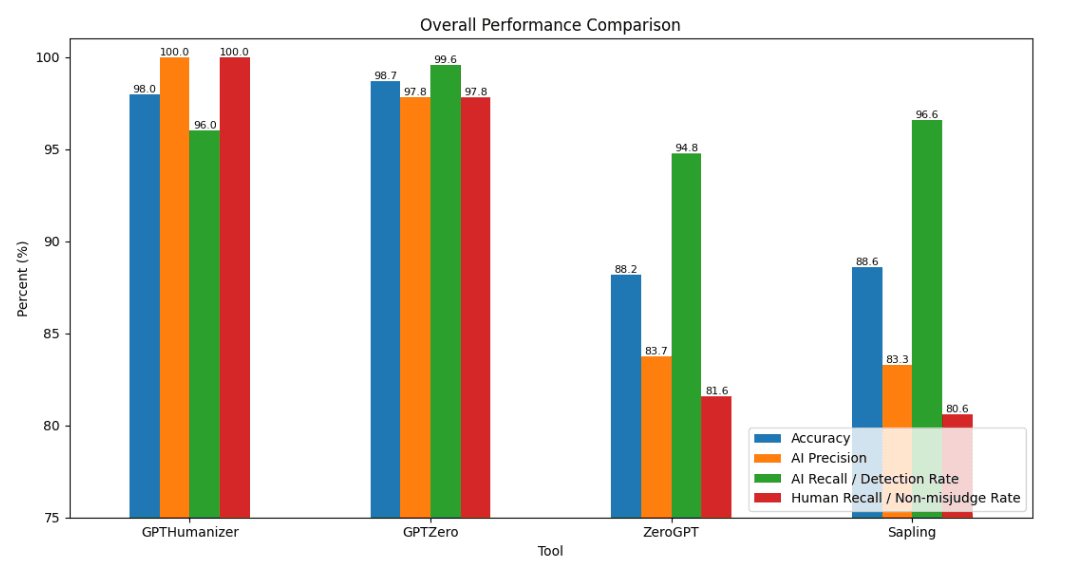
2026 AI Detector Benchmark: Can You Really Trust AI Detectors?
We tested GPTHumanizer, GPTZero, ZeroGPT, and Sapling on 1,000 English texts to compare AI detection...
 Ethan Miller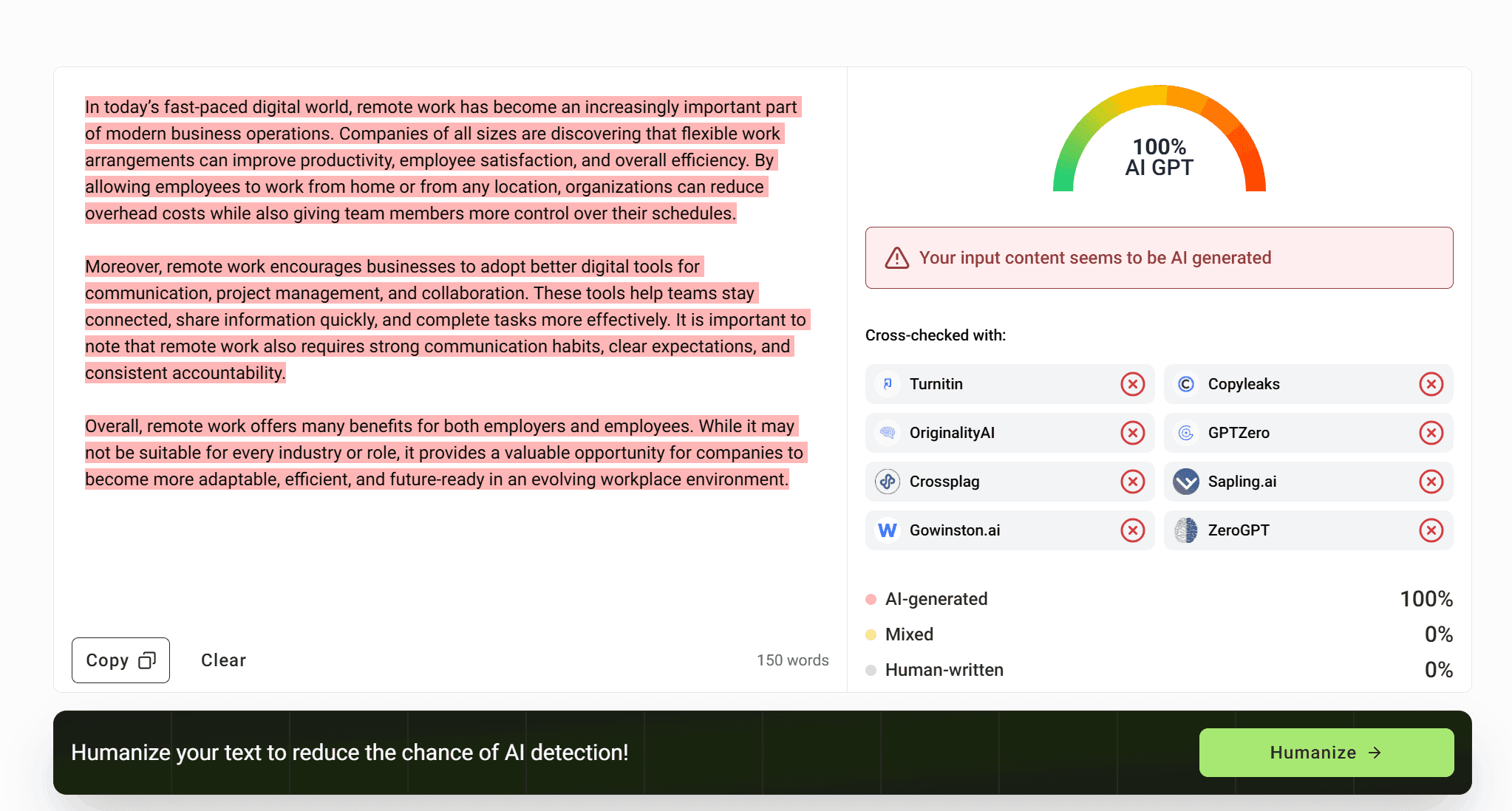
GPTinf AI Detector Review: Is Its Checker Actually Reliable?
GPTinf AI Detector review with real tests on AI text, human writing, GPTinf output, GPTHumanizer AI ...
Ethan Miller