
I Tested 7 Paid AI Humanizers: Which Ones Are Actually Worth Paying For?

Summary
Paid AI humanizers can be useful, but most short trials do not give enough evidence to justify paying immediately. The best paid tool is not the one with the longest feature list or the boldest detector claim; it is the one that reliably preserves meaning, improves readability, and reduces the amount of editing still needed after the rewrite.
- Overall verdict: Paid AI humanizers are worth paying for only when they consistently save editing time across real drafts. A 300-word or 500-word trial is useful for a first impression, but not enough to prove long-term value.
- Best for broader workflow: StealthGPT makes the most sense if you want a larger paid AI writing workspace, not just a simple humanizer. It is harder to justify for users who only need quick AI text rewriting.
- Best polished short trial: Walter Writes feels polished and easy to test, but its 300-word free trial is too short to judge long-form consistency or repeated rewrite quality.
- Best guided workflow: GPTHuman is better for users who want tone controls, rewrite modes, file import, and detector feedback in one workflow. The main weakness is that 300 free words are not enough to properly test that workflow.
- Best budget light-polish option: Natural Write is affordable and useful for short drafts, but it works more like a light polishing tool than a deep humanizer. It is not the best choice for users who need stronger rewriting.
- Worth testing carefully: Ghost AI has a simple $9/month Personal plan and worked best on short email-style text, but its Medium mode results were mixed across blog-style and formal samples.
- Not enough proof from one trial: PaperBleach and Duey AI both show why one-time trials are hard to trust. A single rewrite can look acceptable without proving stable quality across different drafts.
- Detector scores are secondary: AI detector scores should be treated as reference signals, not proof. The better test is whether the rewritten text is clear, accurate, natural, and easier to use after human review.
You paste a real draft into an AI humanizer, click “humanize,” and for a few seconds it feels like the problem is solved. Then the tool asks you to sign up, cuts you off at 300 words, gives you one trial, or pushes you toward a paid plan before you have tested enough to know whether the output is actually good.
That is the exact problem I wanted to test. A lot of AI humanizers look useful on the surface, but the real decision starts when the free access runs out. At that point, you are not asking “does this tool exist?” You are asking, “Is this rewrite good enough that I should pay for it?”
I tested 7 AI humanizers that either require payment, offer very limited free use, or make paid access relevant quickly: StealthGPT, Walter Writes, PaperBleach, Duey AI, GPTHuman, Natural Write, and Ghost AI.
My conclusion is straightforward: paid AI humanizers can be useful, but most are not worth paying for after one short sample. A tool deserves payment only when it consistently saves editing time, keeps the original meaning, improves naturalness, and does not create new cleanup work.
Quick Verdict: Most Paid AI Humanizers Are Not Worth Paying For Immediately
Most paid AI humanizers are only worth paying for after you test them on the kind of writing you actually produce. A short free trial can show the interface and rewrite style, but it usually cannot prove long-term output quality.
If you only rewrite short emails, blog sections, social posts, or everyday AI-generated drafts, I would not start by paying for a subscription. I would first use a free no-sign-up tool as a baseline. If a paid tool does not clearly beat that baseline in meaning retention, rhythm, tone, and editing effort, I would not pay yet.
The mistake is assuming “paid” means “better.” In my testing, the better question was more practical: does this paid tool reduce the amount of editing I still have to do?
Paid AI Humanizers Compared
This table focuses on the details that actually matter before paying: whether you can test the tool for free, how much free access you get, whether login is required, what the cheapest paid option looks like, and whether the test result is strong enough to justify payment.
Tool | Free Limit | Login Required? | Cheapest Paid Option | Test Result | Should You Pay? |
|---|---|---|---|---|---|
StealthGPT | Not available | Yes | $1.00 / day, 50 req /day, 1000 words/req | More like a full AI writing workspace than a simple humanizer | Pay only if you need the broader workspace |
Walter Writes | 300 words | Yes | $8/mon, 750 words/req | Polished workflow, but 300 words is too short to prove quality | Try it, but do not judge the paid plan from one sample |
PaperBleach AI | One free trial, up to 2,500 words | Yes | $7/mon, 200 req/mon, 2500 words/req | Fast, but output quality can suffer if readability gets weaker | Be careful; speed does not equal value |
Duey AI | One short trial, around 3,000–5,000 characters | No for first trial | $5/mon, unlimited | Can soften text, but consistency is mixed | Worth testing once, not enough to pay immediately |
GPTHuman AI | 300 words | Yes | $8.25/mon, 25000 words/mon, 750 words/req | More structured workflow with modes, tone controls, and detector feedback | Better if you want guided editing, but trial is too short |
Natural Write | 300 words | Yes | $4.99/mon, 5000 words/ mon, 3000 words/req | Good for light polish, weaker for deep rewriting | Worth considering only for fast cleanup |
Ghost AI | Around 500 words | No | $9/month, unlimited | Medium mode worked best on short email, mixed elsewhere | Try it, but do not pay based on one sample |
How I Chose These Tools
I began with AI humanizers that users are already most likely to discover when searching for paid rewriting tools. I didn't want this to be a random list of obscure tools. I restricted the list to tools that show up in review searches, alternative pages, pricing comparisons and paid AI humanizer discussions.
I then refined the list to tools with a higher payment threshold: paid-first tools, one-time trials, very tiny word limits, login gated free versions or free versions that are too small to properly judge the product. That is where most users get stuck. You see a rewrite that looks promising but you still don't know if the tool was good enough to pay for.
I also didn't limit the assessment to AI detector scores. The feedback from the detector can be quite useful, but it's not proof. A rewrite can get a better score and still be bad sounding. It can also get a bad score and still be good sounding and more readable. In my case, the main test was if it improved the writing, rather than if the AI detector liked it.
StealthGPT: The Paid-First Workspace
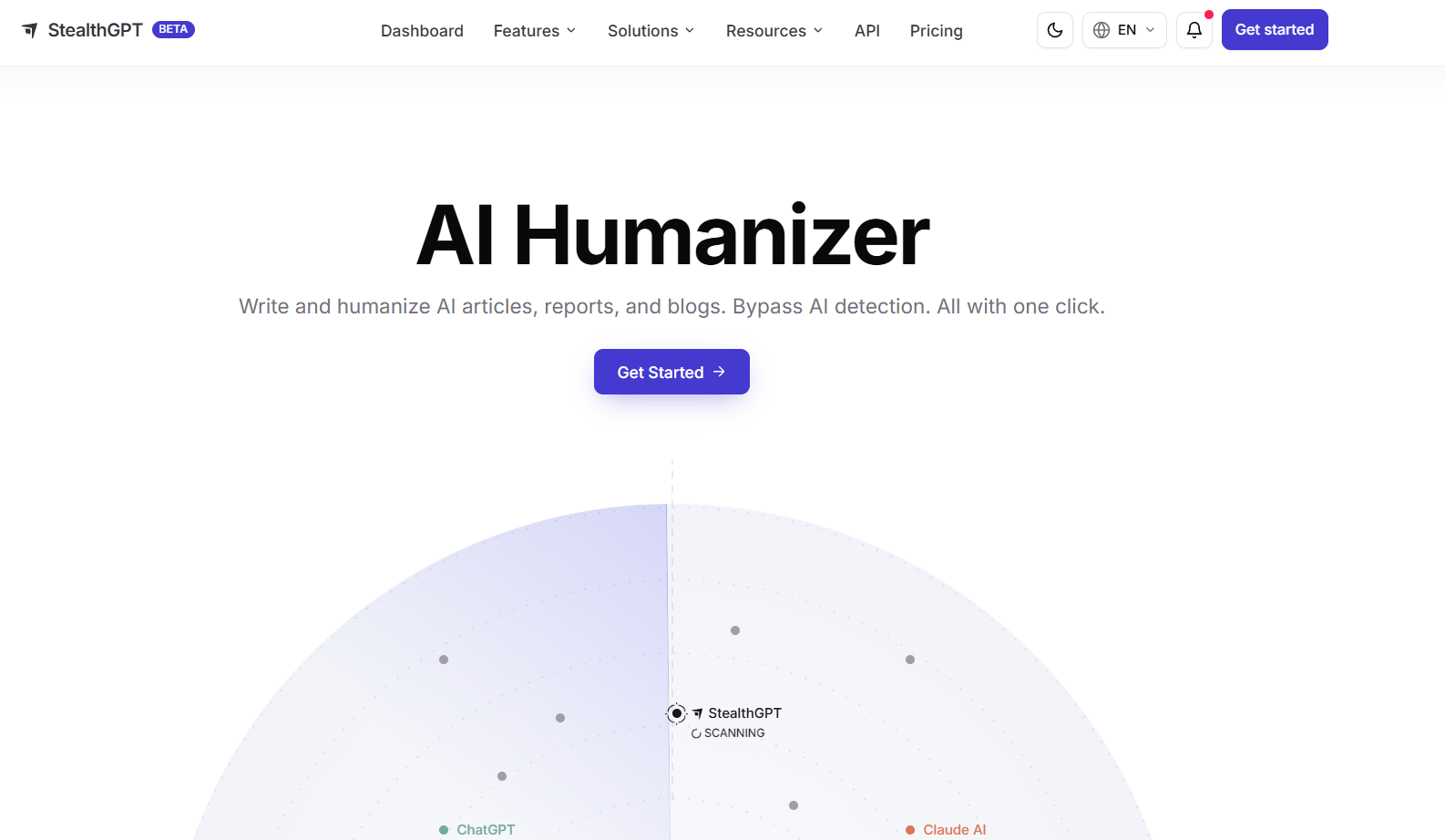
StealthGPT is the clearest paid-first tool in this group. I would not treat it as a simple free AI humanizer. It is better understood as a broader AI writing workspace with humanization, detection, writing assistance, and workflow-style features.
That can be useful if you want multiple writing tools inside one platform. But if your only goal is to make an existing AI draft sound more natural, StealthGPT may feel heavier than necessary. The value depends on whether you need the full workspace, not just the humanizer.
I covered the pricing and output-quality details separately in my full StealthGPT AI review, but the short version is this: StealthGPT makes more sense for users who want a broader paid writing platform than for users who only need quick AI text humanization.
My verdict: StealthGPT may be worth paying for if you want a broader AI writing workspace. If you only need focused AI text humanization, compare its output quality carefully before subscribing.
PaperBleach and Duey AI: One Short Trial Is Not Enough
PaperBleach and Duey AI both create a similar problem for users: you can try them, but the free access is too limited to prove long-term reliability.
PaperBleach gives users one login-gated free trial with up to 2,500 words. That sounds more generous than a 300-word trial, but the issue is not only quantity. In testing, PaperBleach’s output quality was the bigger concern. If a tool rewrites quickly but introduces awkward wording, unnatural slang, or readability problems, the paid value drops quickly.
Duey AI also works more like a short test than a practical free workflow. Its free trial is useful for a first impression, but not enough to know whether the tool will stay reliable across different drafts. In the review, the output showed some useful softening, but it was inconsistent enough that I would not pay based on one trial.
I would treat these as “try carefully” tools. The PaperBleach AI Humanizer review goes deeper into the output-quality issue, while the Duey AI review explains why one short trial is not enough to prove a paid workflow.
My verdict: PaperBleach and Duey AI are worth testing, but neither should be judged from one good-looking output. PaperBleach needs stronger readability control, while Duey AI needs more consistency before it feels like a confident paid choice.
Three 300-Word Trials, Three Different Problems
Walter Writes, GPTHuman, and Natural Write all have a similar free-access pattern: around 300 free words. But they should not be treated as the same kind of tool, because the reason you might pay for each one is different.
Walter Writes is the clearest 300-word trial case. The workflow feels polished, and the product is easy to understand, but 300 words only gives you a quick sample. It does not prove whether the tool will stay useful across longer drafts, repeated rewrites, or different tones. I would call it a polished short trial, not a practical free tool.
GPTHuman is more workflow-heavy. It is not just a quick rewrite box; it offers tone controls, rewrite modes, file import, and detector feedback. That makes it more appealing if you want a guided rewrite-and-check process. The problem is that 300 free words are not enough to properly judge a whole workflow, especially if you need to test different content types.
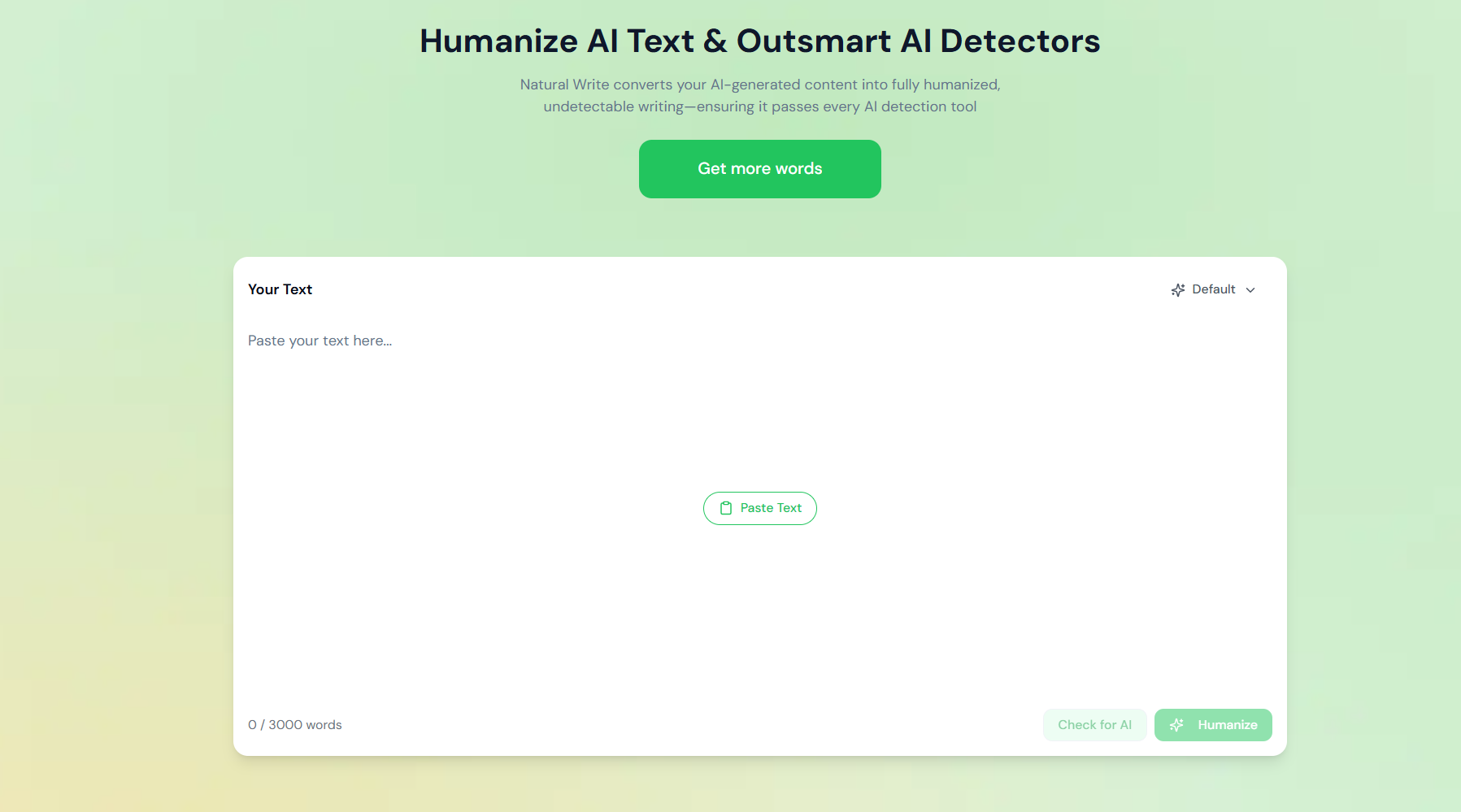
Natural Write is the budget-friendly light-polish option. Its annual pricing starts at $4.99/month for 5,000 words/month, which looks reasonable. But the real test showed that Natural Write is better for quick cleanup than deep rewriting. It worked best on a short email and was weaker on formal explanatory text, where it introduced grammar and phrasing issues.
If you want the deeper version of each result, I would read them separately rather than assuming all 300-word trials behave the same: the Walter Writes AI review focuses on the short trial and workflow feel, the GPTHuman AI review looks at the guided editing setup, and the Natural Write review shows why low pricing does not automatically mean deep rewriting.
My verdict: Walter Writes is the most polished short trial, GPTHuman is the stronger guided workflow, and Natural Write is the cheaper light-polish option. But all three suffer from the same problem: 300 words is too short to prove paid value.
Ghost AI: A $9 Unlimited Plan Still Needs Testing
Ghost AI looks attractive because the pricing is simple. Its Personal plan is shown at $9/month with unlimited words, AI Humanization, AI Detection, and support. It also has API packages for higher word-volume use.
The free trial is the issue. In testing, Ghost AI could be used directly without logging in, but the free access stopped at roughly 500 words. That is enough to test the interface, but not enough to know whether the tool will stay reliable across real writing work.
The Medium mode test was mixed. Ghost AI worked best on a short work email, where the output sounded smoother and less stiff. But the blog-style paragraph and formal explanatory paragraph still showed high AI signals in GPTZero. I would not treat those detector scores as final proof, but they do show that Ghost AI’s output can still carry AI-like patterns.
The full Ghost AI review includes the Medium mode test, pricing notes, and GPTZero reference results, which matter because the $9/month plan looks simple but still needs output-quality proof.
My verdict: Ghost AI is worth trying if you mostly rewrite short messages and like its style. I would not pay for it based on one 500-word trial, even though the $9 unlimited plan looks simple.
What Actually Makes a Paid AI Humanizer Worth Paying For?
The value of a paid AI humanizer depends on what happens after the rewrite, not what the tool promises before you paste your text.
The first thing I check is meaning retention. If a tool changes the point, weakens important details, or shifts the intent, it creates more work than it saves. A rewrite that sounds smoother but changes the message is not a good rewrite.
The second factor is rewrite depth. Some tools mostly polish the surface. That is fine for emails or short posts, but not enough if you want stronger rhythm, less predictable structure, or a more natural voice.
The third factor is sentence quality. A humanizer should not introduce grammar errors, awkward phrasing, or unnecessary wordiness. Natural Write and PaperBleach showed why this matters: even small errors can ruin the value of a fast rewrite.
The fourth factor is editing effort. This is the most practical test. If you still need to rewrite half the output yourself, the tool is not saving much time. A paid plan should reduce manual cleanup, not just generate a different version.
The fifth factor is free trial usefulness. A 300-word sample can show the interface, but it cannot prove long-term reliability. If a tool asks you to pay after one short test, I would be cautious.
When You Should Not Pay Yet
You should not pay for an AI humanizer just because the first output looks better than the original. A single sample can be misleading, especially if the draft is short or already easy to fix.
I would not pay yet if you only need occasional rewrites, short emails, simple blog intros, or light cleanup. In those cases, a free no-sign-up tool is usually the better first step. You can try GPTHumanizer AI free without signing up and use it repeatedly, then decide whether a paid tool actually gives you anything better.
That does not mean every paid tool is bad. It means paid tools need to earn the subscription. If a free baseline already improves clarity, flow, and readability while preserving meaning, the paid tool has to clearly outperform it.
Final Verdict: Which Paid AI Humanizers Are Worth It?
I would not rank these tools from best to worst because they do not solve the same problem. A normal ranking would hide the real decision.
StealthGPT is the best fit if you want a broader paid writing workspace, not just a humanizer. It is harder to justify if your only goal is quick AI text rewriting.
Walter Writes is the most polished short-trial tool, but the 300-word free trial is too short to prove long-term value.
GPTHuman makes the most sense if you want a guided rewrite-and-check workflow, but its 300-word free access does not let you fully test that workflow.
Natural Write is the best budget light-polish option, especially if you mainly edit short drafts. I would not choose it for deeper rewriting.
Ghost AI has a simple $9/month unlimited plan, but the Medium mode test was mixed enough that I would test carefully before paying.
Duey AI is worth trying once, but one short trial is not enough to prove paid reliability.
PaperBleach is the hardest to recommend if output quality matters more than speed, because fast rewriting loses value when readability gets weaker.
My final position is simple: paid AI humanizers are worth it only when they consistently reduce editing time without changing your meaning. If the free trial is too short to prove that, do not pay yet.
Conclusion
The problem with paid AI humanizers is not that they want to take money from the user. Good tools should be able to charge for their services if they save time and improve the quality of writing. The problem is that most tools want you to pay before they have enough evidence.
After testing these 7 tools, I would be careful before paying for AI humanizers. I would test them on the same type of text that I want to write, compare the outputs to a free baseline, and only pay when the tool consistently gives me cleaner, more natural, meaning-preserving rewrites.
For most people, the smartest workflow isn’t “just pick the most expensive humanizer.” It is: start free, test your real drafts, see how much editing is left, and only pay when the tool proves you save time.
FAQ
Q: Are paid AI humanizers worth it?
A: Paid AI humanizers are worth it only if they consistently improve readability, preserve meaning, and reduce editing time across your real drafts. A short free trial is not enough proof by itself.
Q: Are free AI humanizers good enough?
A: Free AI humanizers are usually enough for short emails, blog sections, and quick cleanup. Paid plans make more sense when you need higher limits, stronger modes, faster processing, or workflow features that clearly save time.
Q: How much do paid AI humanizers cost?
A: Paid AI humanizers vary widely in price. In this test, Natural Write started at $4.99/month annually, Ghost AI showed a $9/month Personal plan, and other tools used subscriptions, weekly passes, or paid-first workspaces.
Q: Can AI humanizers make AI text sound 100% human?
A: No AI humanizer should be treated as a guaranteed way to make AI text sound fully human. The best tools improve flow and readability, but the output still needs human review for meaning, tone, grammar, and natural rhythm.
Q: Should I trust AI detector scores after using an AI humanizer?
A: AI detector scores should be treated as reference signals, not proof. A lower score does not always mean better writing, so judge the final text by clarity, accuracy, natural rhythm, and editing effort.

Related Articles
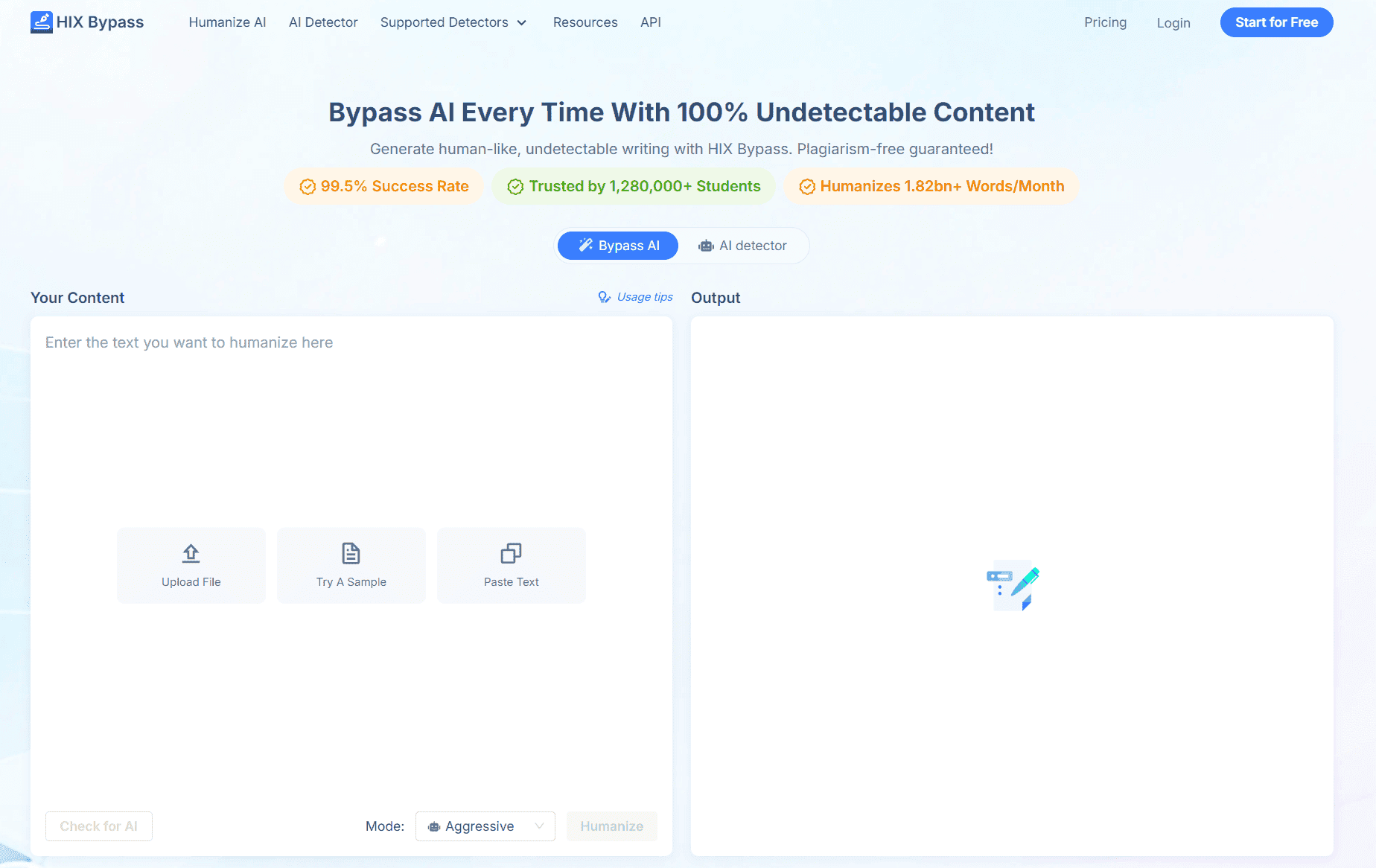
HIX Bypass Pricing Explained: Is It Worth Paying For in 2026?
A practical look at HIX Bypass pricing, paid-plan value, word limits, refund terms, and whether it i...
 Ethan Miller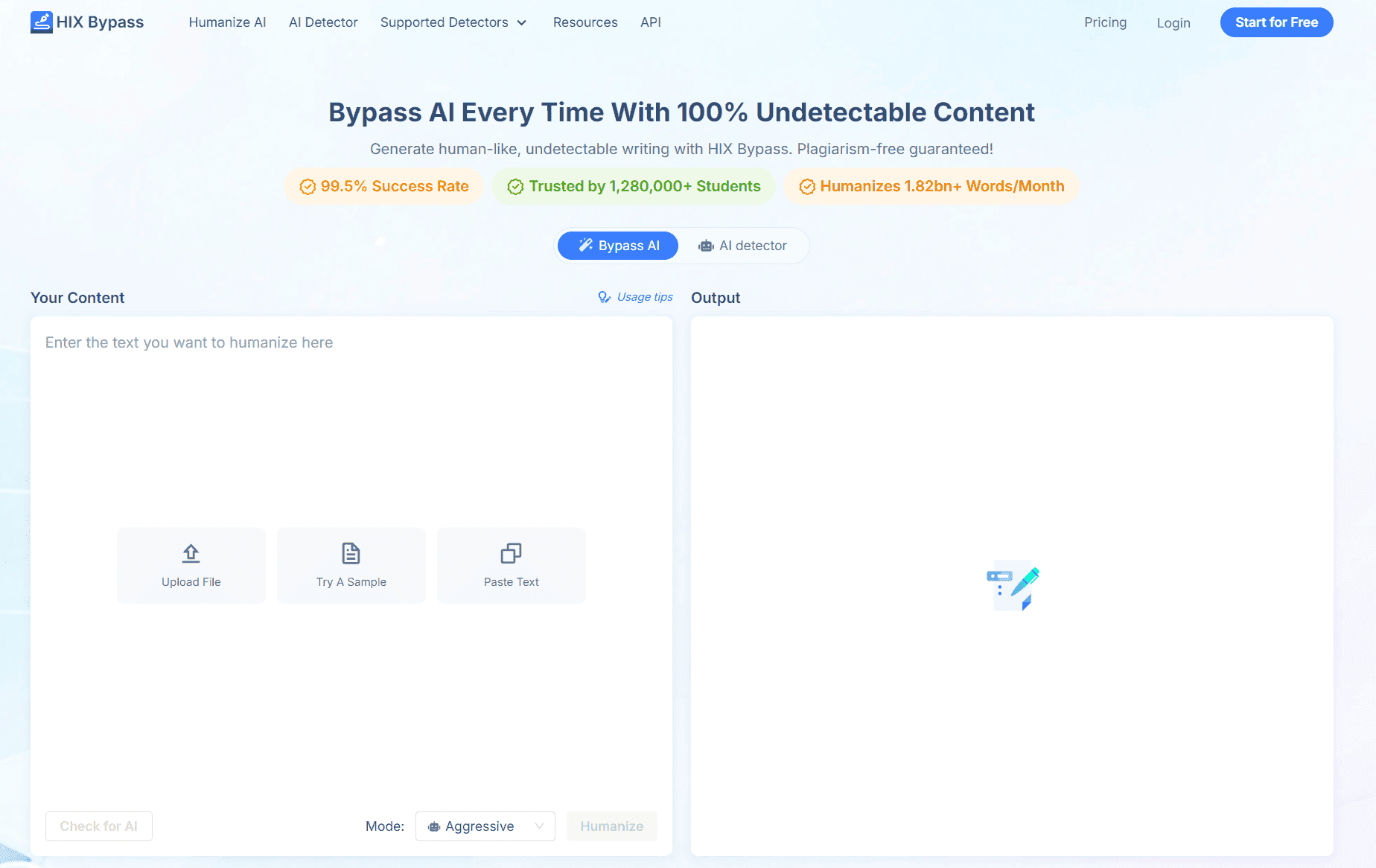
Does Hixbypas Work in 2026? Fast, and Aggressive Modes Tested
Does Hixbypas, or HIX Bypass, actually work? I tested Fast and Aggressive modes to compare rewrite q...
Ethan Miller
Best HIX Bypass Alternative: Free, No-Sign-Up AI Humanizer Compared
Looking for a HIX Bypass alternative? Compare HIX Bypass with GPTHumanizer for free access, no-sign-...
Ethan Miller
StealthGPT AI Review 2026: Features, Pricing, Output Quality, and Alternatives
I reviewed StealthGPT AI across pricing, features, rewrite quality, and real writing use cases. See ...
Ethan Miller