
Is StealthGPT Good for Natural AI Rewriting? Output Quality Review 2026

Quick Answer
I tested StealthGPT with several common writing scenarios to see whether its rewritten output actually sounded more natural. I want to see the real quality of the humanized output, is the meaning preserved? is there any grammar error? how many time do i need to continue editing?
From my text results, Stealthgpt can rewrite the AI-generated text, but the output quality is not always consistent, sometimes the text can be much longer than the orignial text, and grammar error can also occur.
If you want a broader overview of StealthGPT’s features, pricing, user feedback, and alternatives, read our full StealthGPT AI review.
For the complete review of StealthGPT’s features, pricing, output quality, and alternatives, read our full StealthGPT AI review.
Why I Focused on Output Quality Instead of Feature Count
StealthGPT offers a list of features. When I review a AI humanizer, I care more about its quality, is the rewritten text actually better? Because a tool can have many features, but the core feature is still weak.
That is why this review focuses on output quality. I wanted to know whether StealthGPT’s rewriting made the text genuinely better, not just different.
What Makes an AI Rewrite Good?
Before testing StealthGPT, I used a simple quality checklist.
A good AI rewrite should not simply replace words with synonyms. It should improve the paragraph while keeping the original meaning intact.
Here are the main standards I used:
Quality Standard | What I Checked |
Meaning preservation | Did the rewrite keep the original idea and claim? |
Natural flow | Did the sentences sound smooth? |
Tone fit | Did the output match the use case, such as academic, blog, email, or SEO writing? |
Clarity | Did the rewrite make the message easier to understand? |
Concision | Did the output avoid unnecessary filler or inflated wording? |
Editing effort | Would I need to heavily edit the rewritten version before using it? |
A weak rewrite changes the surface wording, makes sentences longer, and creates a more formal paragraph without improving the actual writing.
That was the issue I saw in several StealthGPT outputs.
How I Tested StealthGPT Output Quality
I tested StealthGPT with different writing scenarios, include academic writing, blog writing and work email.
Test Scenario | Why I Chose It |
Academic writing | Tests clarity, precision, and meaning preservation. |
Blog writing | Tests readability, rhythm, and reader engagement. |
Work email | Tests tone, professionalism, and natural phrasing. |
I did not only test one short sentence. I used paragraph-level examples to show their real strengths and weaknesses.
For each example, I asked four questions:
1. Did the rewrite preserve the original meaning?
2. Did the paragraph become easier to read?
3. Did the tone fit the writing scenario?
4. Would I need to manually rewrite the output again?
This last point is important. If a humanizer creates a paragraph that still needs heavy cleanup, it may not save much time.
Test 1: Academic Writing
Academic writing is a good test for any AI humanizer because clarity matters more than decoration. A strong academic rewrite should not make the paragraph sound more complicated. It should make the idea clearer, more precise, and easier to follow.
Here was the original paragraph I tested:
Artificial intelligence has become an important factor in modern education because it provides students with many opportunities to improve their learning efficiency. It can assist learners by generating explanations, summarizing materials, and offering personalized feedback. However, students should also be careful when using AI tools because overdependence may reduce critical thinking and independent learning ability.
This original paragraph is not perfect, but it is clear. The main idea is easy to understand: AI can help students learn, but students should avoid becoming too dependent on it.
Here was the StealthGPT output:
Due to the fact that students may gain significant opportunities to enhance their learning efficiency with AI in the field of modern education, AI technology is regarded as an important consideration in this area. Although it can help students generate explanations, summarize the content, and provide personalized responses, it is necessary to be careful when utilizing AI for learning purposes, especially due to the possible consequence that students may develop a reliance on AI and lose the abilities of independent thinking and learning.
Output Quality Review
The StealthGPT output keeps the general meaning of the original paragraph, but it does not improve the writing quality. The original version is simple and clear: AI can help students learn more efficiently, but students should avoid becoming too dependent on it. The rewrite makes this same idea longer, heavier, and harder to follow.
The first problem is inflated wording. The phrase “Due to the fact that” is much heavier than “because,” and it makes the opening sentence feel unnecessarily complicated. The phrase “in the field of modern education” also adds little value because the paragraph is already about education.
The second problem is vague filler. “AI technology is regarded as an important consideration in this area” sounds formal, but it does not say much. It makes the paragraph look more academic without making the argument clearer.
The third issue is awkward phrasing. “Utilizing AI for learning purposes” sounds less natural than “using AI to learn.” The phrase “lose the abilities of independent thinking and learning” is also not idiomatic. A clearer version would be “lose the ability to think and learn independently.”
Overall, StealthGPT changes the surface wording, but the output is not stronger. It becomes more formal, more inflated, and less readable. For academic writing, this is not ideal because a good rewrite should improve clarity and precision, not simply make the paragraph sound more complicated.
Test 2: Blog Writing
Blog writing needs a different tone from academic writing. It should be direct, readable, and easy to follow. A blog paragraph should usually feel lighter and more conversational than an academic paragraph.
Here was the original blog-style paragraph:
Productivity apps are becoming increasingly popular because they help users manage tasks, organize schedules, and improve work efficiency. Many people use these tools to reduce stress and complete their goals more effectively. Choosing the right productivity app depends on the user’s needs, preferences, and daily workflow.
Here was the StealthGPT output:
Productivity applications are gaining more popularity as they assist individuals in managing assignments, arranging calendars, and enhancing operational efficiency. Many users rely on these solutions to minimize pressure and accomplish objectives in a more effective way. Selecting the proper productivity application depends on personal requirements, preferences, and everyday workflow.
Output Quality Review
The StealthGPT output keeps the basic meaning, but it makes the paragraph less suitable for blog writing. The original paragraph is simple and readable. It explains that productivity apps help people manage tasks, reduce stress, and choose tools based on their workflow. The rewrite says the same thing, but in a heavier and less conversational way.
The main issue is word choice. “Productivity applications” sounds more formal than “productivity apps,” and “assist individuals” feels less natural than “help users” or “help people.” For a blog paragraph, these changes make the text feel distant instead of reader-friendly.
The rewrite also uses phrases that are too corporate for a simple blog topic. “Enhancing operational efficiency” is much heavier than “improving work efficiency,” and “accomplish objectives” sounds less natural than “complete goals.” These phrases make the paragraph look more polished on the surface, but they reduce readability.
Another problem is that the rewrite does not add a stronger hook or improve the flow. A good blog rewrite should make the paragraph more engaging, not just replace everyday words with formal alternatives.
Overall, the StealthGPT output is grammatically correct, but it is not better blog writing. It becomes more formal, more generic, and less direct. For blog content, a stronger rewrite should sound lighter, clearer, and closer to how real people explain a useful tool.
Test 3: Work Email
Work emails are another useful test because they require a careful balance. The tone should be professional, but it should not sound robotic.
Here was the original email paragraph:
I am writing to follow up regarding the proposal that was shared last week. Please let me know if you have had the opportunity to review the document. I would be happy to answer any questions or provide additional information if needed.
Here was the StealthGPT output:
I am reaching out to follow up concerning the proposal that was distributed last week. Kindly inform me whether you have had the chance to examine the document. I would be pleased to respond to any inquiries or offer further details if necessary.
Output Quality Review
The StealthGPT output keeps the same basic message, but it makes the email sound colder and more robotic. The original paragraph is slightly formal, but it is still clear and usable. The rewrite replaces normal business language with heavier wording that feels less natural.
The first issue is word choice. “I am reaching out to follow up” is common, but “concerning the proposal” sounds stiffer than “regarding the proposal” or simply “about the proposal.” The phrase “distributed last week” also feels less natural than “shared last week” or “sent last week” in a normal work email.
The second issue is tone. “Kindly inform me whether you have had the chance to examine the document” sounds overly formal and almost bureaucratic. In most professional emails, a simpler sentence like “Let me know when you’ve had a chance to review it” would feel more human and easier to read.
The third issue is unnecessary formality. “I would be pleased to respond to any inquiries or offer further details if necessary” is grammatically correct, but it sounds distant. “I’d be happy to answer any questions or send over more details if helpful” would sound more natural while still staying professional.
Common Problems I Found in Weak AI Humanization
After reviewing these examples, I noticed a pattern. The biggest issue was not grammar. Most outputs were grammatically acceptable.
The problem was that the rewritten text often became more formal without becoming more natural.
Here are the common issues I found:
Problem | Example | Why It Hurts Quality |
Inflated wording | “Due to the fact that…” | Makes a simple idea longer than necessary. |
Vague filler | “an important consideration in this area” | Sounds formal but adds little meaning. |
Awkward phrasing | “lose the abilities of independent thinking” | Understandable, but not idiomatic. |
Overloaded sentences | Multiple ideas packed into one sentence | Makes the paragraph harder to follow. |
Tone mismatch | Blog or email text becomes too academic | Reduces readability and engagement. |
Surface-level rewriting | Words change, but structure stays weak | The paragraph looks different but still feels mechanical. |
This is why I do not judge an AI humanizer only by whether the output looks different. A different paragraph is not always a better paragraph.
A good rewrite should make the writing more usable.
What GPTZero and ZeroGPT Suggested in My Test
This review factors in output quality, however, I also ran the academic version StealthGPT output through two well-known AI text checkers; GPTZero and ZeroGPT.
Now a t's normal that AI checker scores will differ depending on the length of the text, topic, sentence structure, and edits made to the text. Also, different AI checkers will produce different results for the same paragraph.
But I was curious to see if the StealthGPT rewriting resulted in decreasing the signals of AI-like writing.
Results from zerogpt:
Results from GPTZero
The final results are good actually in terms of AI rate. It is marked as human written, regardless of its bad text quality.
When StealthGPT Output Works Well
StealthGPT can still be useful in some situations.
It may work well for users who want a broader AI writing workspace and are comfortable reviewing the output manually.
StealthGPT may be a good fit if:
Scenario | Why It May Work |
You want multiple AI writing tools | StealthGPT offers more than simple rewriting. |
You are comfortable editing the final text | Manual review can fix awkward or overly formal phrases. |
You prefer formal writing | Some users may like a more formal rewrite style. |
You want a general-purpose writing assistant | The broader toolkit may matter more than one specific rewrite. |
In other words, StealthGPT makes more sense when the user values feature breadth and does not mind editing the output carefully.
It is less convincing when the user only needs one thing: a clean, natural rewrite.
If you are deciding whether the output quality justifies the cost, read our StealthGPT pricing review before choosing a paid plan.
StealthGPT vs GPTHumanizer for Rewrite Quality
StealthGPT might be worth considering for people who want a more robust AI writing workspace. But when the core issue is rewrite quality, GPTHumanizer is the better tool.
GPTHumanizer is designed to do one job: take AI-assisted draft writing and make it more natural, clearer, and more usable. Here is the difference:
Quality Area | StealthGPT | GPTHumanizer |
Product focus | Broader writing workspace | Focused AI humanizer |
Best for | Users who want multiple AI writing tools | Users who want natural rewriting for existing drafts |
Main rewrite risk | Output may become too formal or inflated | Focuses on preserving meaning and improving natural flow |
Tone control | Depends on workflow and editing | Clear style options for academic, blog, email, professional, and more |
Editing effort | May still require cleanup if output becomes awkward | Designed to reduce post-editing effort |
Best user | Someone who wants an all-in-one platform | Someone who wants a cleaner, more natural rewrite |
If your main goal is to improve an existing draft, the best tool is not always the one with the most features. It is the one that produces the most usable rewrite.
For a full decision-level comparison, read our StealthGPT vs GPTHumanizer comparison.
For a full side-by-side decision guide, read our StealthGPT vs GPTHumanizer comparison.
What to Check Before Choosing an AI Humanizer
Before choosing any AI humanizer, test it with your own writing. Do not judge only by the homepage, feature list, or marketing claims.
Use this checklist:
Check | Question to Ask |
Meaning preservation | Does the rewrite keep the original idea? |
Natural flow | Does it sound like a real person wrote it? |
Tone fit | Does the tone match the use case? |
Sentence clarity | Are sentences easier to read, or just longer? |
Word choice | Are the words natural, or overly formal? |
Editing effort | Would you still need to rewrite the output yourself? |
Use-case fit | Does it work for academic, blog, email, or SEO writing? |
Is this safer than a post? Not enough paragraphs? trololo?
Give me 4 copies of the original, 4 copies of the reworded text and tell me the likes of me.
Simple test. Copy&paste a paragraph that you have in mind to actually use. Pass it through various tools that you are maybe considering the use of. Then ask yourself: which version would I actually publish, submit, send.
Final Verdict
StealthGPT can rewrite AI text and might produce better results on GPTZero, ZeroGPT, and other checkers. However, after trying them myself, I found that good result in checkers does not always imply good writing quality.
My biggest issue was over-proffionality. The academic rewrite only made the text longer and less clear. The blog rewrite used simple form words and made it corporate. And the email rewrite turned a regular follow-up mail into a cold robotic one.
So I guess what I found is simple: StealthGPT can help you change your wording, but it does not always make your writing better.
If you want a larger AI writing work space and are ready to edit the result yourself, StealthGPT is still worth something. But when your goal is natural rewrite, clearer tone and less editing effort, GPTHumanizer is more often the better choice.
FAQ
Is StealthGPT good for natural rewriting?
StealthGPT can rewrite text, but the output quality depends on the writing scenario. In some cases, the rewrite may become more formal or longer without becoming clearer. Users should judge the output by meaning preservation, natural flow, tone fit, and editing effort.
Why does StealthGPT output sound formal?
Some AI humanizers rely heavily on word replacement and formal phrasing. This can make the text look different but not necessarily more natural. Phrases such as “due to the fact that” or “utilizing” may make a paragraph sound heavier than the original.
Is StealthGPT good for academic writing?
StealthGPT may be useful for academic writing if the user reviews the output carefully. However, academic writing needs clarity and precision. A rewrite that becomes longer, vaguer, or more inflated may require additional editing.
Is StealthGPT good for blog writing?
StealthGPT may work for some blog drafts, but users should check whether the output sounds reader-friendly. Blog writing usually needs direct language, natural rhythm, and a clear hook. Overly formal rewriting can reduce engagement.
Does StealthGPT preserve meaning?
StealthGPT may preserve the general meaning in many cases, but users should still review the output carefully. A rewrite can keep the main idea while adding vague filler or awkward phrasing.
What did GPTZero and ZeroGPT suggest in the test?
In my test, GPTZero and ZeroGPT suggested that some rewritten output still showed AI-like writing patterns. These tools should not be treated as final proof, but their signals can help users notice when a rewrite remains too mechanical or formulaic.
What is the best StealthGPT alternative for natural rewriting?
GPTHumanizer is a strong alternative if your main goal is natural rewriting for existing AI-assisted drafts. It focuses on meaning preservation, tone control, readability, and reducing repetitive AI-like phrasing.

Related Articles
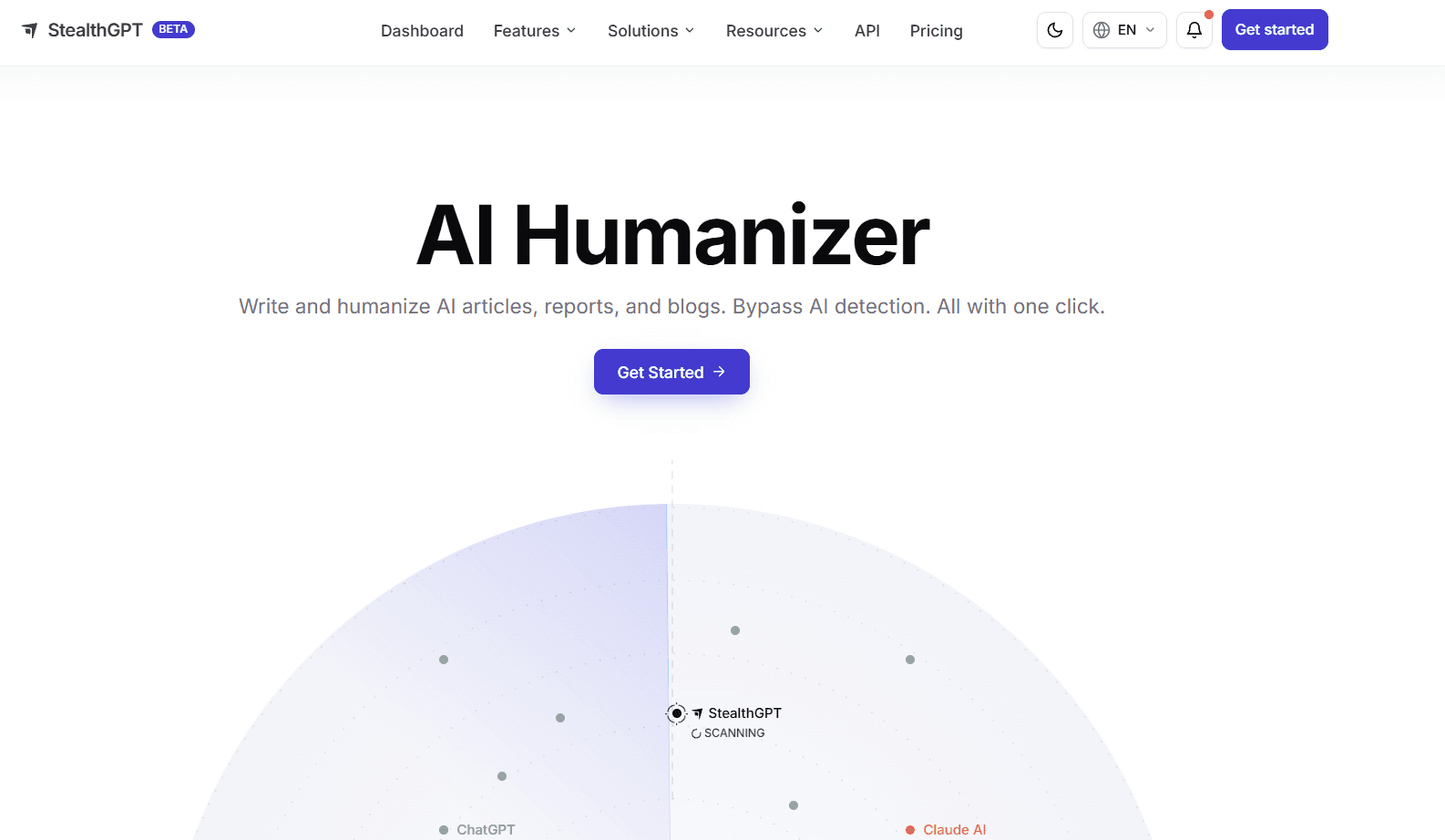
StealthGPT AI Review 2026: Features, Pricing, Output Quality, and Alternatives
I reviewed StealthGPT AI across pricing, features, rewrite quality, and real writing use cases. See ...
 Ethan Miller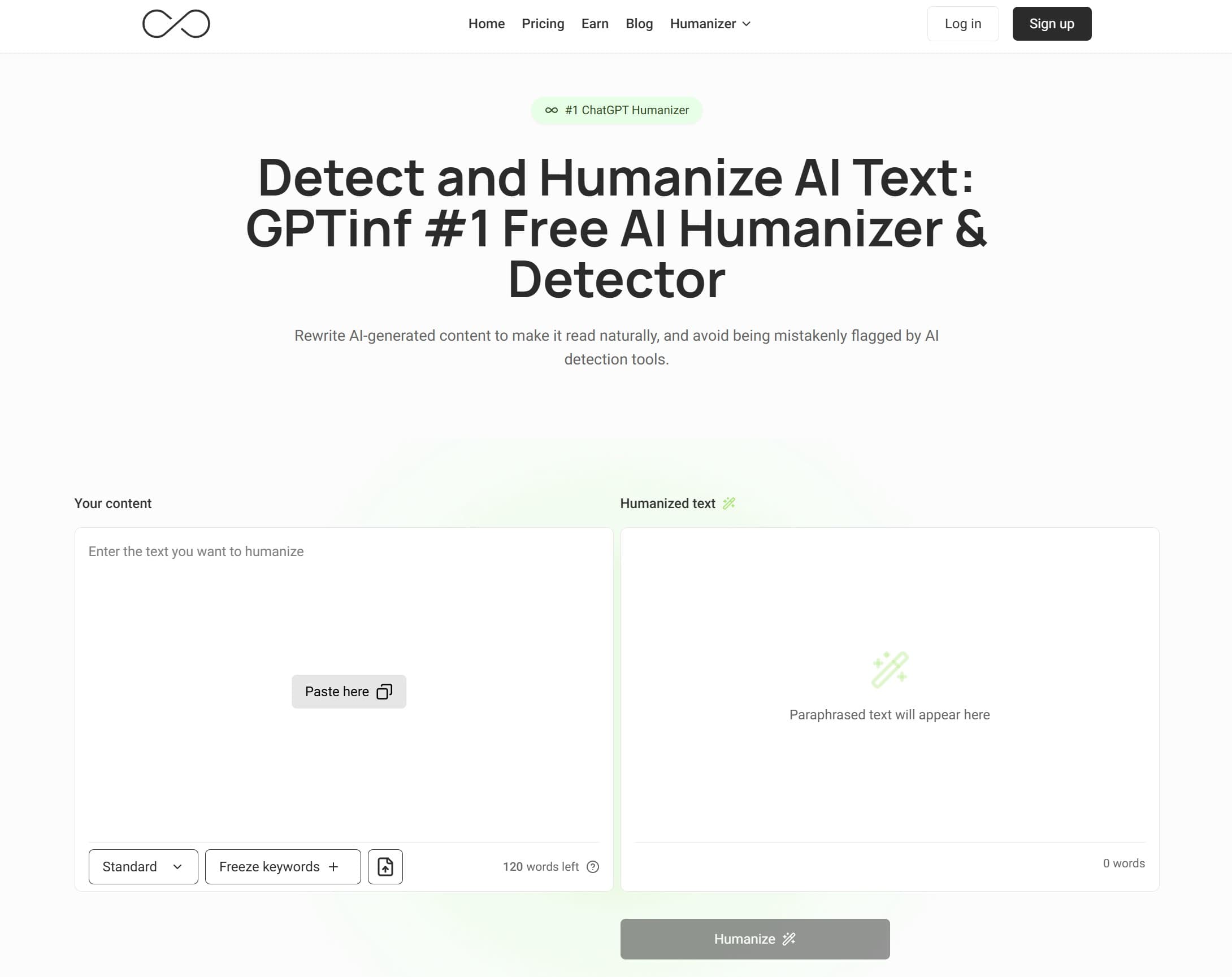
Best Free GPTinf Humanizer Alternative With No Sign-Up: What to Try Before Paying
Looking for a free GPTinf alternative? See why GPTHumanizer AI is a better no-sign-up option before ...
Ethan Miller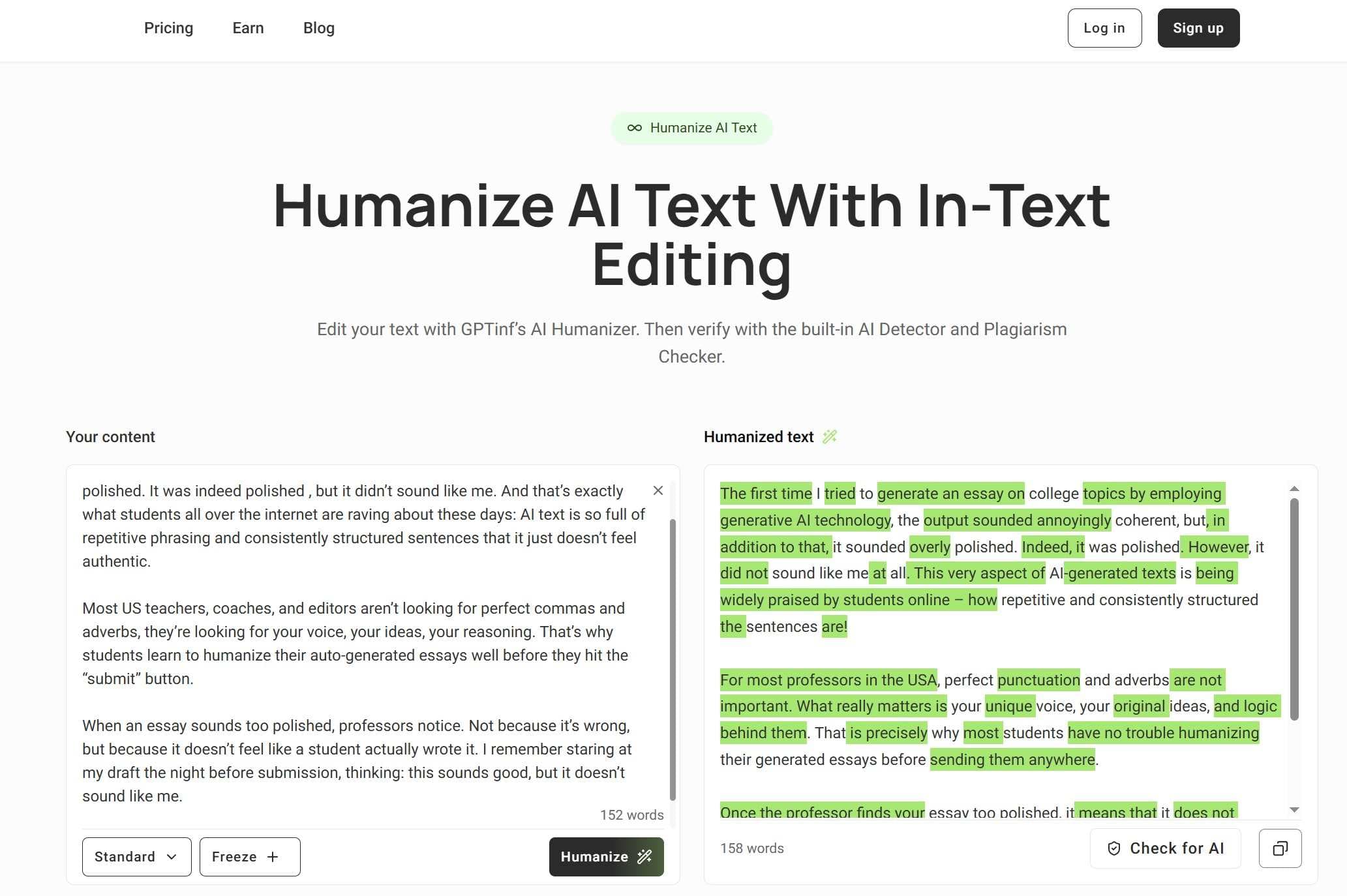
Is GPTinf Free? Free Trial, Pricing, Login Rules, and Limits Explained
Is GPTinf free? See its no-login trial, official 120+120 free word rule, paid pricing, upgrade promp...
Ethan Miller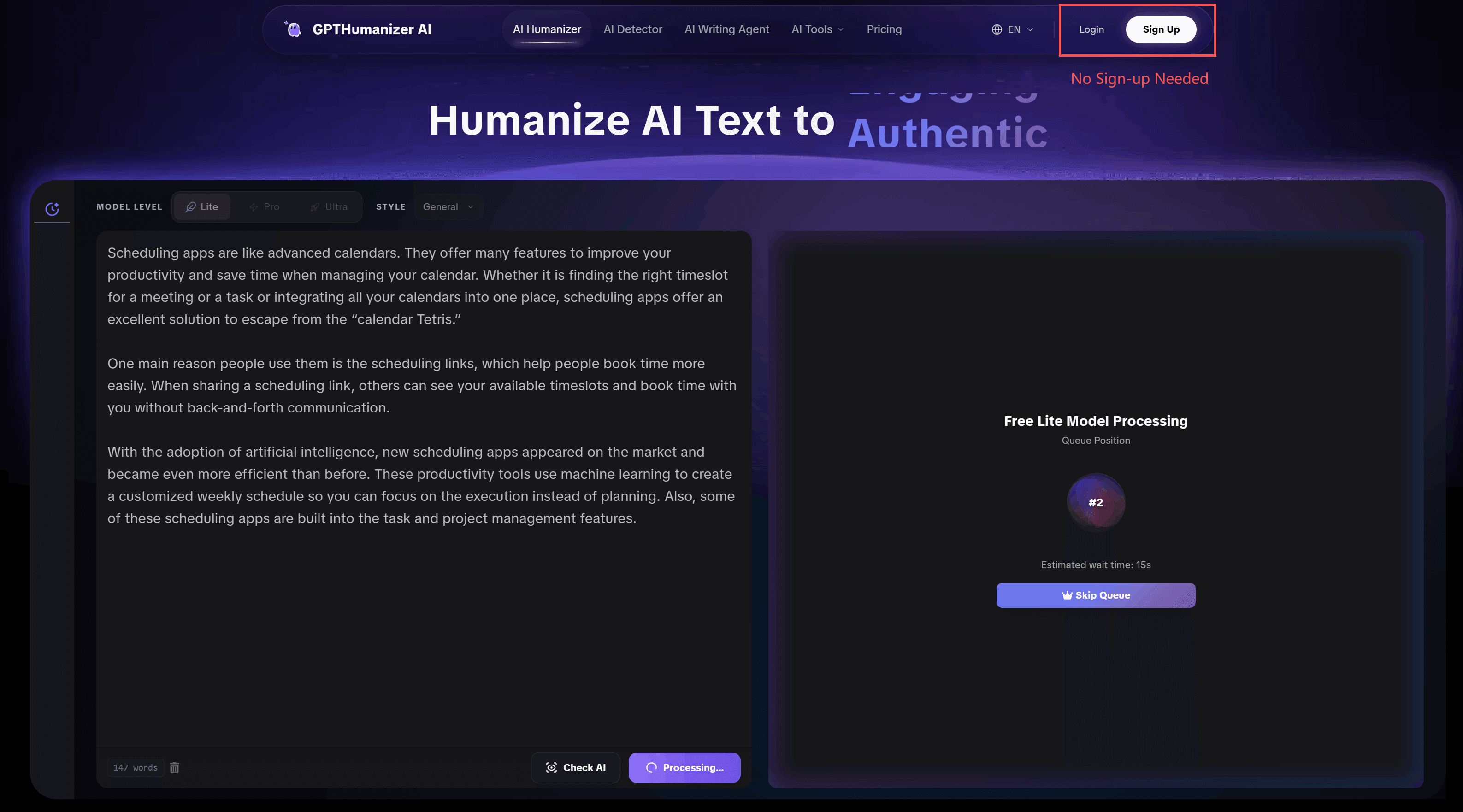
Best Free PaperBleach AI Alternative With No Sign-Up
Need a free PaperBleach AI alternative? Try GPTHumanizer AI for no sign-up access, unlimited free us...
Ethan Miller