
StealthGPT vs GPTHumanizer: Which Tool Is Better for Natural AI Rewriting in 2026?

Quick Verdict
StealthGPT and GPTHumanizer are meant for different audiences.
StealthGPT is more like a general AI writing workbench. It has around AI writing, rewriting, checking, document workflows and browser-based usage, so it can be convenient if you want to have many writing tools in one platform.
GPTHumanizer is more of a target audience. It can be used if you already have an AI assisted draft and want it to sound more natural, clear, human-like and less mechanical. But still preserve the original meanings and tone.
Here is the short answer:
User Need | Better Choice | Why |
|---|---|---|
I want one platform with many AI writing tools | StealthGPT | It offers a broader writing toolkit. |
I already have a draft and want it to sound natural | GPTHumanizer | It focuses directly on AI text humanization. |
I want to test before paying | GPTHumanizer | The free Lite model makes it easier to compare output quality. |
I care most about meaning preservation | GPTHumanizer | The workflow is built around rewriting without over-changing the message. |
I want browser or document workflow features | StealthGPT | It may fit users who want a broader workspace. |
I want a simpler humanizer for essays, blogs, emails, or work drafts | GPTHumanizer | It is easier to use for focused rewriting tasks. |
Overall, StealthGPT may be a better fit if you want an all-in-one AI writing workspace. GPTHumanizer is usually the better fit if your main goal is natural AI rewriting, clearer tone, and easier free testing before paying.
1. How This Comparison Is Different
This article is not a full StealthGPT review. It focuses on one practical question: which tool is more useful if your main goal is to improve AI-assisted writing?
To keep the comparison fair, we look at:
rewrite quality
meaning preservation
tone control
If you want a broader overview of StealthGPT’s features, pricing, Reddit feedback, and common user concerns, read our full StealthGPT AI review.
If you want the complete picture before comparing tools, read our StealthGPT AI review, where we cover features, pricing, output quality, and alternatives in one place.
The world of AI writing tools is expanding faster than ever. Alongside the rise of ChatGPT and other large language models, we’ve also seen the rise of AI detection tools—software designed to identify whether text was written by a human or generated by AI. Naturally, this gave birth to a new type of service: AI humanizers that claim to make AI text look indistinguishable from human writing.
Two names stand out in this space: StealthGPT and GPTHumanizer.ai. Both promise to help you humanize AI text and avoid detection, but how do they really compare?
In this review, I’ll walk through their features, pricing, performance, and real user feedback, to help you decide which one is right for you.
3. What is StealthGPT?
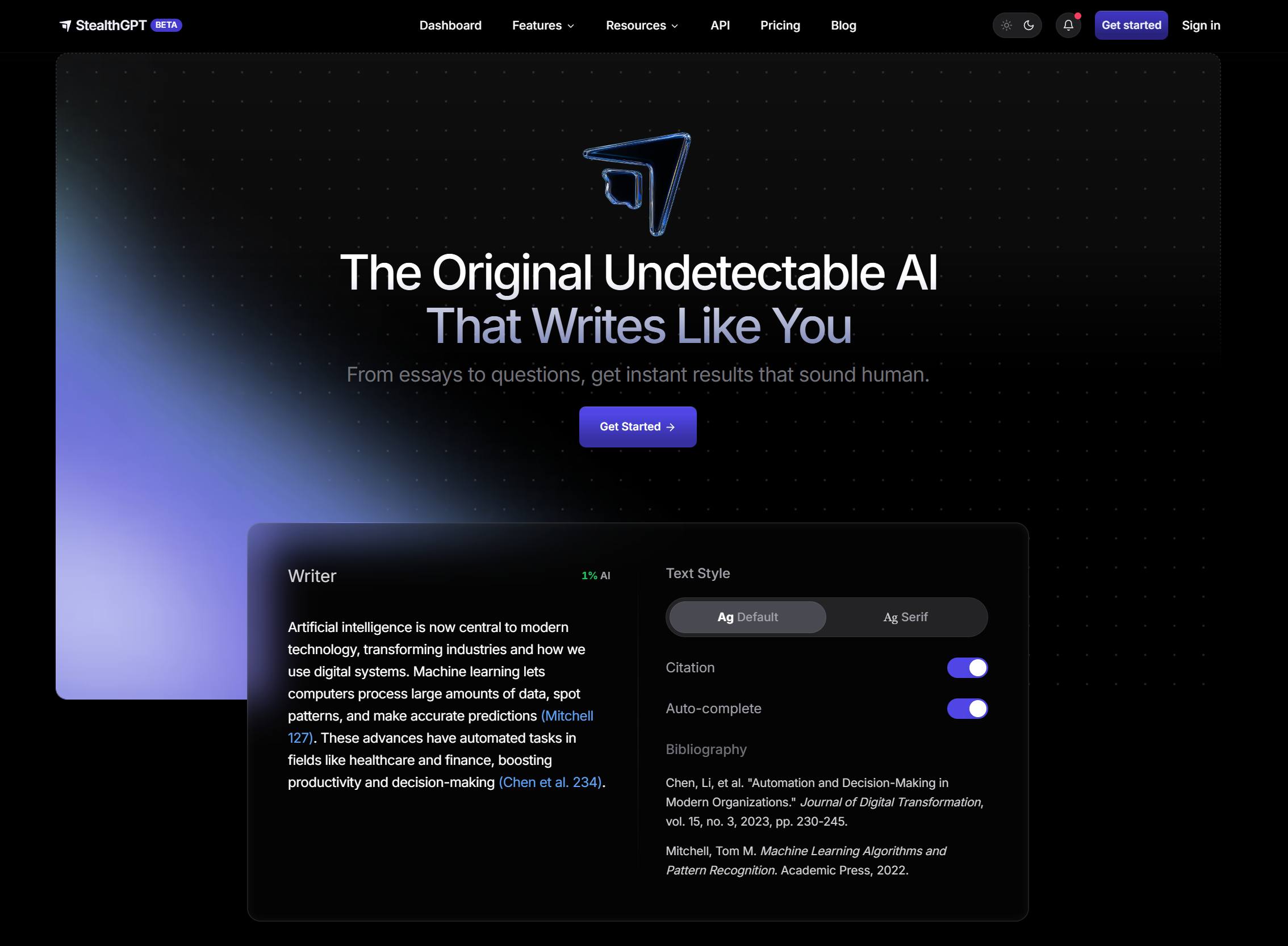
StealthGPT is an AI writing platform that also offers writing workspaces, AI humanizer, rewrite, and AI detection-style checks, as well as workflows that integrate documents and browser-based writing. So it’s more than just an AI humanizer.
That wide range of tools can be valuable for people who want to use one writing workspace to manage a variety of writing tasks. But for people who just want to humanize an existing AI-generated draft, it may be more than what they need.
For this review, the question isn’t whether StealthGPT offers more options. It’s whether the options offer more value for your writing workflow.
3.9/5.0 star rating on Trustpilot bills itself as an “natural-sounding AI” platform. Its value proposition is simple: No matter the use case, whether you’re looking to generate text directly using the proprietary Stealth Writer, or you have existing AI-generated text you want to bypass detectors with, StealthGPT will create text that can fool a variety of AI detection tools, including GPTZero, , Originality AI, Turnitin, and ZeroGPT.
4. Features Compared
Category | StealthGPT Strengths | GPTHumanizer Strengths |
Content Generation | Can generate new articles via Stealth Writer that are designed to bypass detection. | Focused on rewriting only—best for polishing existing drafts. |
AI Detection / Analysis | Built-in AI Checker with bypass mode; promises to fool multiple detectors. | Free AI detection tool to analyze text before and after humanization. |
Languages & Flexibility | Over 100+ languages supported at higher tiers; Extreme Stealth Mode for bypassing stricter detection tools. | Primarily English-focused but emphasizes high-quality natural rewrites. |
Ease of Use | More complex interface with multiple tools (writer, humanizer, checker). | Very straightforward—paste text, choose a mode, then click humanize. |
5. Who Should Choose StealthGPT vs GPTHumanizer?
The best choice depends on what you actually need from the tool.
Scenario | Choose StealthGPT If... | Choose GPTHumanizer If... |
|---|---|---|
You want an all-in-one workspace | You want writing, rewriting, checking, and document tools in one place. | You do not need a full workspace and only want better rewriting. |
You care about natural tone | You are comfortable editing the output yourself. | You want the rewrite to sound less stiff and more natural from the first pass. |
You write academic drafts | You want multiple writing tools around the drafting process. | You want to preserve meaning, improve clarity, and keep the tone appropriate. |
You write blogs or SEO content | You want broad writing features. | You want smoother flow, fewer repetitive phrases, and more readable paragraphs. |
You write emails or work documents | You want a general writing assistant. | You want a cleaner, more professional rewrite without overcomplicating the workflow. |
You want to test before paying | You are ready to evaluate StealthGPT’s paid plans. | You want easier free testing with your own draft first. |
In simple terms: choose StealthGPT if you want more tools. Choose GPTHumanizer if you want a more focused AI humanizer.
6. Use Case Comparison: Which Tool Works Better in Real Writing?
The best way to compare StealthGPT and GPTHumanizer isn’t just to compare feature lists. A better way is to ask: how useful is the rewritten paragraph after one pass?
Below are a few of the most common writing scenarios where people want to use AI humanizers: academic writing, a blog piece, work emails, and SEO writing.
These examples don’t show you what to expect every time you use each tool. They show you what to look for when judging the quality of a rewrite: meaning preservation, tone control, natural rhythm, and how much editing the resulting paragraph still needs.
Use Case 1: Academic Writing
Original AI-style paragraph:
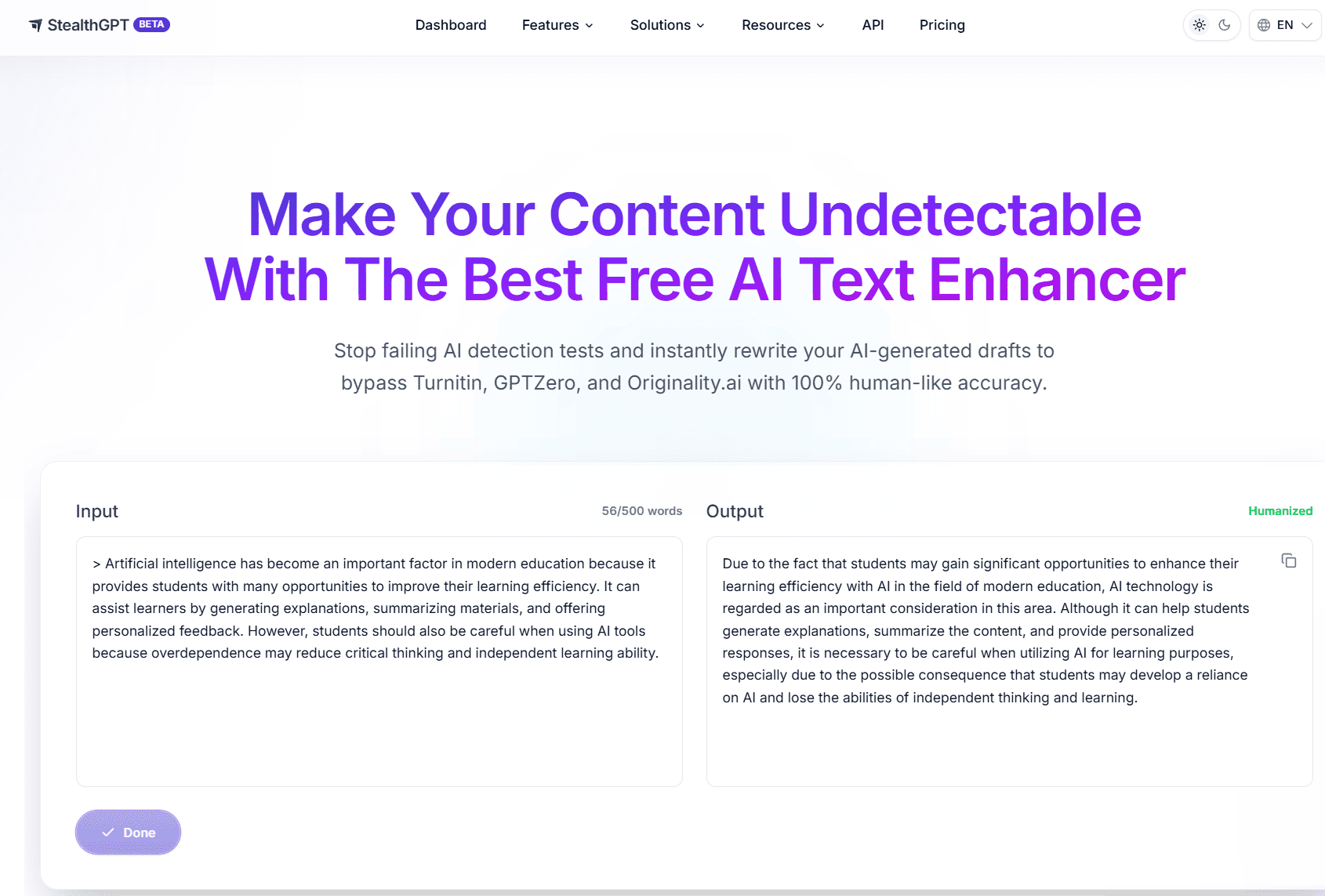
Artificial intelligence has become an important factor in modern education because it provides students with many opportunities to improve their learning efficiency. It can assist learners by generating explanations, summarizing materials, and offering personalized feedback. However, students should also be careful when using AI tools because overdependence may reduce critical thinking and independent learning ability.
Stealthgpt Output:
Due to the fact that students may gain significant opportunities to enhance their learning efficiency with AI in the field of modern education, AI technology is regarded as an important consideration in this area. Although it can help students generate explanations, summarize the content, and provide personalized responses, it is necessary to be careful when utilizing AI for learning purposes, especially due to the possible consequence that students may develop a reliance on AI and lose the abilities of independent thinking and learning.
Why stealthgpt's rewrite is not ideal:
This StealthGPT version looks rewritten, but it does not read better. The main issue is that it replaces simple academic language with heavier, less natural phrasing.
The original sentence says that AI gives students opportunities to improve learning efficiency. StealthGPT changes this into “students may gain significant opportunities to enhance their learning efficiency with AI in the field of modern education.” This is longer, but not clearer. The phrase “in the field of modern education” is unnecessary because the whole paragraph is already about education.
The rewrite also adds vague filler language, such as “AI technology is regarded as an important consideration in this area.” This sentence does not communicate much. It sounds formal, but it does not make the argument stronger.
The ending is also less natural than the original. “Students may develop a reliance on AI and lose the abilities of independent thinking and learning” sounds awkward. A more fluent academic sentence would be: “students may become too dependent on AI and weaken their ability to think and learn independently.”
Overall, StealthGPT’s output shows a common problem with weak AI humanization: it changes the wording without improving the writing. The paragraph becomes longer, more formal, and more mechanical. For academic use, this is not ideal because clarity and precision matter more than simply making the text look different.
Use Case 2: Blog Writing
Original AI-style paragraph:
Productivity apps are becoming increasingly popular because they help users manage tasks, organize schedules, and improve work efficiency. Many people use these tools to reduce stress and complete their goals more effectively. Choosing the right productivity app depends on the user’s needs, preferences, and daily workflow.
What a weak rewrite often looks like:
Productivity applications are gaining more popularity as they assist individuals in managing assignments, arranging calendars, and enhancing operational efficiency. Many users rely on these solutions to minimize pressure and accomplish objectives in a more effective way. Selecting the proper productivity application depends on personal requirements, preferences, and everyday workflow.
Why this rewrite is not ideal:
The rewrite is technically correct, but it does not sound like a natural blog paragraph. It uses heavier words such as “applications,” “operational efficiency,” and “accomplish objectives,” which make the paragraph feel less human and less reader-friendly.
Use Case 3: Work Email
Original AI-style paragraph:
I am writing to follow up regarding the proposal that was shared last week. Please let me know if you have had the opportunity to review the document. I would be happy to answer any questions or provide additional information if needed.
What a weak rewrite often looks like:
I am reaching out to follow up concerning the proposal that was distributed last week. Kindly inform me whether you have had the chance to examine the document. I would be pleased to respond to any inquiries or offer further details if necessary.
Why this rewrite is not ideal:
This version is grammatically fine, but it sounds too formal and unnatural for most business emails. Words like “concerning,” “distributed,” “examine,” and “inquiries” make the email feel robotic.
Use Case 4: SEO Content
Original AI-style paragraph:
AI humanizers are useful tools for content creators because they can transform AI-generated text into more natural and readable content. These tools are especially valuable for bloggers, marketers, and SEO professionals who need to publish high-quality content at scale. By improving sentence structure and tone, AI humanizers can help content perform better for readers.
What a weak rewrite often looks like:
AI humanization platforms are beneficial solutions for creators because they can convert AI-produced writing into content that appears more organic and readable. These tools are particularly advantageous for bloggers, marketing professionals, and SEO experts who need to generate premium content in large quantities. By enhancing sentence arrangement and tone, AI humanizers may support improved audience performance.
Why this rewrite is not ideal:
This version keeps the basic meaning, but it sounds unnatural and over-optimized. Phrases like “beneficial solutions,” “appears more organic,” “premium content in large quantities,” and “audience performance” feel generic and awkward.
For a closer look at real rewritten paragraphs, including academic writing, blog content, and work emails, read our StealthGPT output quality review.
7. What These Examples Show
Across these use cases, the key difference is not only whether a tool can rewrite text. The real question is whether the rewritten paragraph is actually usable.
A strong AI humanizer should:
Quality Standard | Why It Matters |
|---|---|
Preserve meaning | The rewrite should not change the original claim or intention. |
Improve natural flow | The paragraph should sound smoother, not just more complicated. |
Match the use case | Academic writing, blog writing, and work emails need different tones. |
Avoid over-formality | Many weak rewrites sound more robotic because they use heavier vocabulary. |
Reduce repetitive AI-like phrasing | The output should feel less generic and less formulaic. |
Require less manual editing | A useful rewrite should save time, not create more cleanup work. |
This is why GPTHumanizer is often the better choice for users who already have a draft and want it to sound more natural. StealthGPT may be a better fit for users who want a broader AI writing workspace, but GPTHumanizer is more focused on the rewriting quality itself.
8. Real User Reviews
Let’s turn to Trustpilot for reviews of StealthGPT to give you a balanced answer:
● Positive experiences:
“I’ve been using Stealth GPT for over a year for work and school. It has been amazing! The recent updates made it even more versatile for my writing.”
● Negative experiences:
“It will pass AI detection but the content isn’t legible. No one writes like the output, and it isn’t formal writing. Only subscribe if you don’t care about the quality of your writing.”
“This app is not worth the money I paid for it. It hasn’t helped in any way.”
So the reality is as I mentioned in the previous sections: StealthGPT can help with detection bypass but the output quality is hit or miss.
GPTHumanizer doesn’t have similarly reliable public usage statistics on Trustpilot yet but based on user feedback and product focus, the tool should score high on readability and naturalness, but not on guaranteed bypass success.
9. Final Verdict: Which One To Choose?
If you want an all-in-one text generation, rewriting, and detection testing platform—and you don't mind the higher price tag to access more languages and “stealth” modes for different AI detectors—then StealthGPT is worth considering. But you’ll likely need to further edit and refine its output for readability.
If you just want an easy, affordable, and effective humanizer for existing AI writing—and “natural flow” is your chief priority—then GPTHumanizer is a better choice.
No matter which one you choose, one thing is clear: a perfect AI humanizer does not exist. You should ALWAYS check the final draft and manually polish and proofread it. These tools will get you 90% there. Your human touch is what will make it shine. For a forward-looking view on why humanization will matter even more in 2026, see the role of GPT Humanizer in 2026.
FAQ
Is GPTHumanizer a StealthGPT alternative?
Yes. GPTHumanizer is a StealthGPT alternative for users who mainly need AI text humanization. StealthGPT is broader, while GPTHumanizer is more focused on rewriting existing AI-assisted drafts into clearer and more natural writing.
Which is better, StealthGPT or GPTHumanizer?
It depends on your workflow. StealthGPT is better if you want a broader AI writing platform. GPTHumanizer is better if your main goal is natural rewriting, meaning preservation, and a simpler humanization workflow.
Is StealthGPT better for students?
StealthGPT may be useful for students who want multiple AI writing tools in one platform. GPTHumanizer may be better for students who already have a draft and want to improve clarity, tone, and natural flow. Students should always follow their school’s AI writing and citation policies.
Is GPTHumanizer better for bloggers and SEO writers?
GPTHumanizer is a strong fit for bloggers and SEO writers who want to make AI-assisted drafts sound less generic, less repetitive, and more readable. It is especially useful when the draft already exists and only needs better flow and tone.
Which tool is easier to use?
GPTHumanizer is usually simpler for direct text humanization because it focuses on one main workflow: paste your draft, choose a style, and generate a more natural version. StealthGPT may involve more tools because it is a broader writing workspace.
Which tool gives better pricing value?
StealthGPT may offer better value if you use many tools in its platform. GPTHumanizer may offer better value if you mainly need humanization and want to test output quality before paying.
Can either tool guarantee AI detector results?
No tool should be treated as a guaranteed way to control AI detector outcomes. Detector scores vary by tool, text type, length, and editing process. A better goal is to improve clarity, naturalness, meaning preservation, and responsible final review.

Related Articles
HIX Bypass Pricing Explained: Is It Worth Paying For in 2026?
A practical look at HIX Bypass pricing, paid-plan value, word limits, refund terms, and whether it i...
 Ethan Miller
Does Hixbypas Work in 2026? Fast, and Aggressive Modes Tested
Does Hixbypas, or HIX Bypass, actually work? I tested Fast and Aggressive modes to compare rewrite q...
Ethan Miller
Best HIX Bypass Alternative: Free, No-Sign-Up AI Humanizer Compared
Looking for a HIX Bypass alternative? Compare HIX Bypass with GPTHumanizer for free access, no-sign-...
Ethan Miller
StealthGPT AI Review 2026: Features, Pricing, Output Quality, and Alternatives
I reviewed StealthGPT AI across pricing, features, rewrite quality, and real writing use cases. See ...
Ethan Miller