
The Role of GPT Humanizer in 2026: Transforming AI Content Creation

Summary
Core Argument: AI humanizers matter because AI-generated writing often looks correct but still feels mechanical, overly polished, or disconnected from real human expression. Their real value is not simple word replacement, but improving rhythm, flow, tone, readability, and reader connection.
Key Point 1: AI text often sounds “AI” because of overly even sentence rhythm, template-heavy transitions, overconfident conclusions, and thin examples. These patterns make writing feel polished but unnatural.
Key Point 2: A humanizer works best as a revision layer. It can improve naturalness, reduce formulaic structure, and adapt tone to context, but it cannot guarantee outcomes or replace responsible human review.
Key Point 3: AI humanizers are most useful when a draft already has a clear idea but still sounds stiff, repetitive, or too generic. Writers, editors, marketers, students, and SEO professionals may all benefit, but for different reasons.
Key Point 4: AI humanizers cannot fix weak, empty, inaccurate, or high-risk drafts on their own. They work best when combined with human judgment, fact-checking, and final review.
Practical Takeaway: The right place for an AI humanizer is in the middle of the writing workflow—after the initial draft, but before final editing and publishing.
Introduction: The Need for Humanized AI Content
AI is quickly taking over content creation. But, AI-generated text often doesn’t sound natural or interesting. ChatGPT, Claude, Gemini have all made huge leaps in creating coherent and contextually relevant text. But their outputs often lack the emotional depth, tone and detailed writing style of a real person. As a result, AI-generated text often sounds mechanical, repetitive or too formal. This tends to turn off readers.
This phenomenon is especially pronounced in creative fields like academic reports, blogging, marketing and storytelling that rely on a human connection. While AI writing tools excel in speed and efficiency, they often miss the mark when it comes to capturing the subtle emotional cues, and conversational tone integral to human expression. That’s why we’re seeing the rise of AI humanizers, tools designed to refine AI-generated content by making it sound more human.
What Makes AI Text Sound "AI"? (Quick Checklist)
If any of these feel familiar, you’re not alone—this is exactly why “humanizing” matters.
Overly even sentence rhythm (similar sentence lengths; paragraphs move in a mechanical cadence)
Template-heavy transitions (too many “First/Second/Finally,” predictable structure cues)
Overconfident conclusions (absolute claims with little nuance or hedging)
Thin examples / low information density (general statements, few specifics, few real-world details)
Tip: The fastest way to spot “AI tone” is to read one paragraph out loud—if it sounds like a polished brochure rather than a human thought, it likely needs revision.
In many cases, the issue is not that the writing is wrong. It is that the writing feels too smooth, too generic, or too mechanically complete. That is where AI humanizers become useful—not as shortcuts, but as revision tools that help improve flow, tone, and reader connection.
If you want the deeper technical explanation for why models can mimic grammar so well yet still miss human pacing, see our guide on how deep learning models mimic human syntax.
What Is GPT Humanizer?
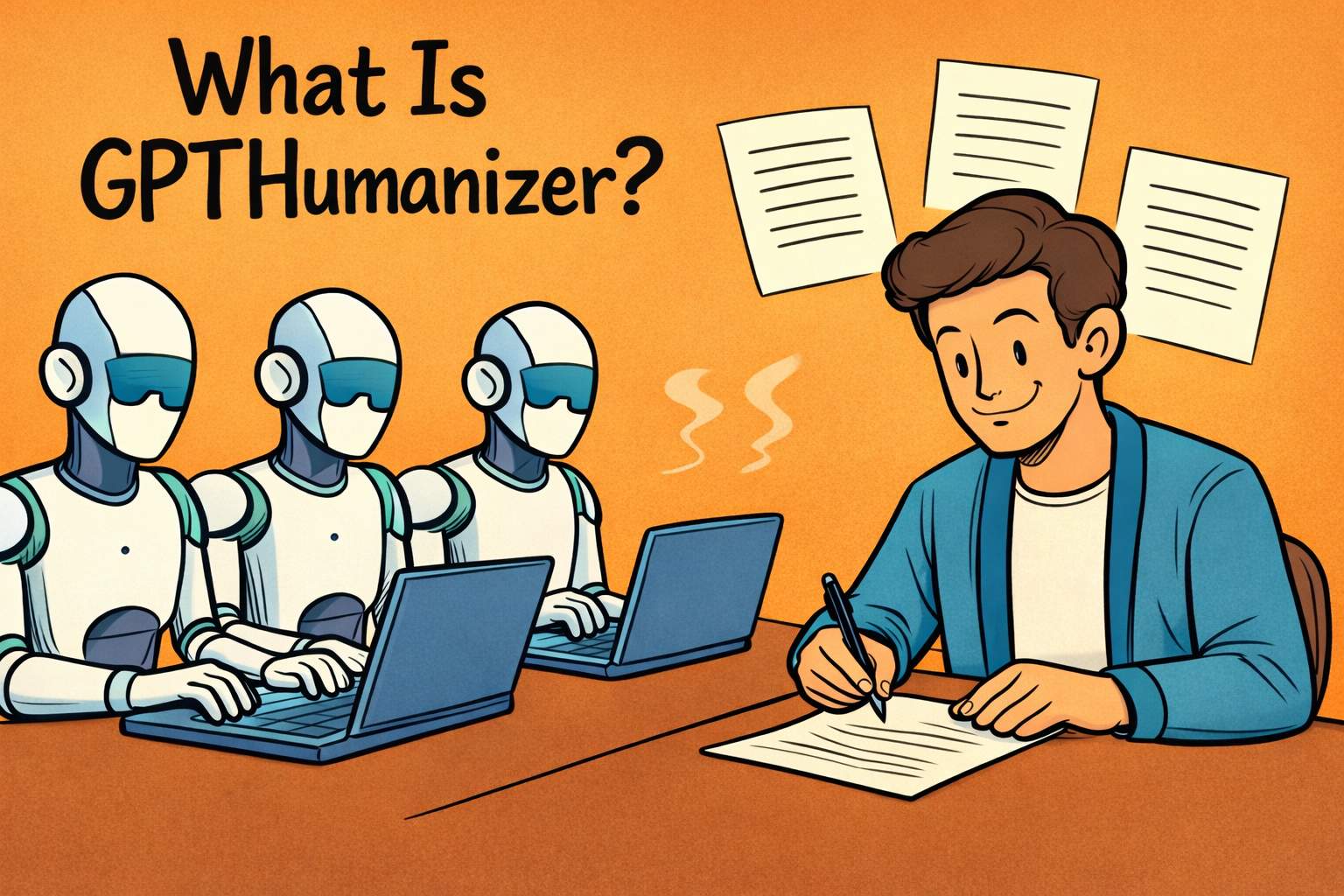
A GPT humanizer is a tool that revises AI-generated text so it reads more like something a real person would write. Instead of only changing words, it usually works by improving sentence rhythm, transitions, tone, and overall readability.
In practice, people use GPT humanizers when an AI draft is already usable in content, but still feels too robotic, too repetitive, or too polished in a way real human writing usually does not. The goal is not to make text “perfect.” The goal is to make it feel more natural and more believable to real readers.
What a GPT Humanizer Can—and Can't—Do
A GPT humanizer is best viewed as a rewrite + style refinement tool, not a guarantee of outcomes.
What it can do
Improve naturalness and readability (more human pacing, less repetition)
Rewrite structure while preserving meaning (clearer flow, better transitions)
Adapt tone to context (academic, blog, email, professional, etc.)
Reduce obvious “machine patterns” (formulaic phrasing, mechanical paragraphing)
What it can’t promise
No “100%” guarantee against every detector, policy, or evaluation method
No universal results for every topic, prompt, or writing style
No replacement for responsible review in high-stakes settings
Important: Always do a final human pass—especially for facts, citations, medical/legal/financial content, and any high-risk or compliance-sensitive writing. Use tools ethically and follow your institution’s or platform’s rules.
The best way to think about a humanizer is as a revision layer—not a guarantee, and not a substitute for judgment.
What Strong AI Humanizers Usually Offer
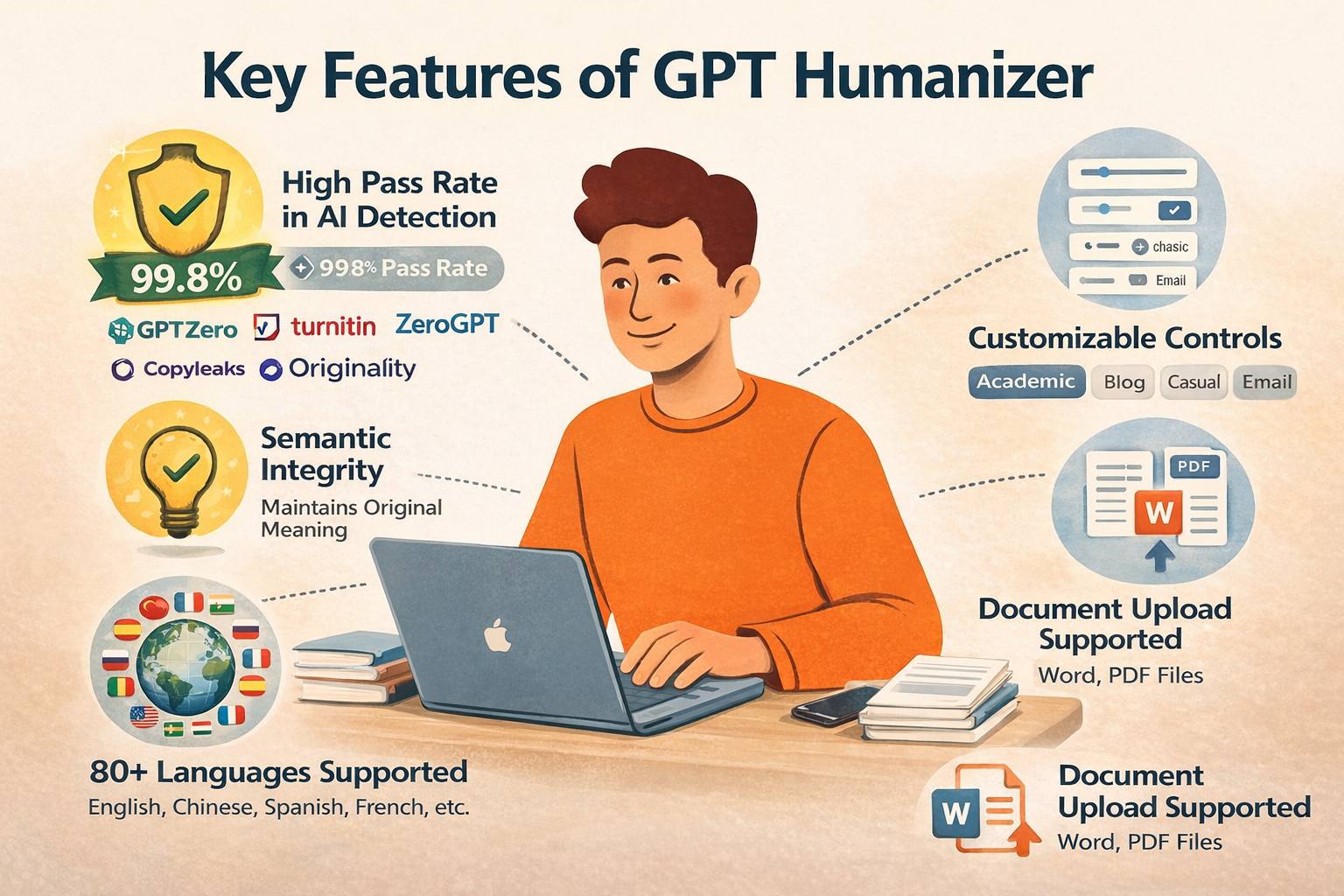
1. Better readability and more natural pacing
A strong humanizer should make AI text feel less repetitive and less formulaic without making it unreadable or exaggerated.
2. More control over tone and context
Different types of writing need different tones. A useful humanizer should help adapt content for blogs, academic drafts, emails, and professional writing.
3. Flexible workflows for different content types
Long-form articles, short posts, and structured documents all need different levels of revision. Strong tools usually work best when they support more than one kind of writing task.
Why People Use AI Humanizers
People use AI humanizers when a draft is clear in content but still feels too robotic, too predictable, or too detached from the way real people usually write.
If your goal is broader editing strategy—not just tool theory—our guide to humanization strategies for 2026 breaks down how to improve tone, readability, and audience fit across different kinds of AI writing.
1. Improve naturalness and readability
AI drafts can be grammatically fine and still feel stiff. Humanizers help make pacing, sentence variation, and paragraph flow feel more natural.
2. Reduce formulaic structure
Many AI drafts rely on stock transitions, flat examples, and overly neat paragraph patterns. Humanizers can make the writing feel less templated.
3. Adapt tone to context
The tone that works for an academic draft is not the same as the tone that works for a blog post, a marketing page, or a professional email. Humanizers help adjust writing for different contexts.
4. Speed up revision
When the core idea is already there, a humanizer can make cleanup faster for writers, editors, marketers, and students.
5. Make AI-assisted writing feel more publishable
The goal is not to make writing perfect. The goal is to make it feel clearer, more readable, and more believable to real readers.
Where AI Humanizers Fit in a Real Writing Workflow
A humanizer works best as a middle step in the writing process—not as a replacement for thinking, and not as a final shortcut used without review.
Define the goal (submission, SEO post, email, landing page, assignment)
Pick a tone (Academic / Blog / Email / Professional / Casual)
Humanize in passes (start paragraph-by-paragraph, then run the full piece)
Do a sentence-level sweep (rewrite any lines that still sound “template-like”)
Finish with a human read-through (check facts, terminology, consistency, and voice)
If you already know you want a tool-specific process, our guide on how to use GPTHumanizer AI walks through the practical workflow step by step.
Who should use AI Humanizer ?
1. Content creators
Content creators often use humanizers when AI drafts feel usable but still too flat, too repetitive, or too generic for publication.
2. Marketers
Marketers often use humanizers when copy sounds technically clear but lacks natural tone, audience fit, or persuasive rhythm.
3. SEO professionals
SEO writers and editors often use humanizers to improve readability, reduce repetitive structure, and make informational content feel less mechanical.
4. Educators and students
Students and educators may use humanizers to improve clarity and reduce stiffness, but they still need careful review—especially in academic settings where meaning, citations, and policy rules matter.
If your main problem is specifically ChatGPT output, start with our guide on how to make ChatGPT text sound human for students, bloggers, and marketers.
What AI Humanizers Cannot Fix
AI humanizers can improve tone, flow, and readability, but they cannot turn a weak draft into a strong one by themselves. If the original writing is empty, inaccurate, or unclear, humanizing it will not solve the deeper problem. In those cases, rewriting and review matter more than style refinement.
How to choose a good ChatGPT Humanizer ?
If your next question is which tool fits your workflow best, start with our roundup of the top AI humanizers of 2026. If cost, word limits, or sign-up friction matter most, see our guide to the best free AI humanizer with unlimited words and no sign-up required.
Here are some key things to think about:
● Check the Detection pass success rate. Look for a tool with a high success rate in avoiding AI detection.
● Think about Customization. Pick a tool that lets the user adjust some parameters, like academic, blog, casual, email, professional etx to fit different use cases.
● Think about Language Support. If the writer needs to humanize documents in different languages, look for a tool that supports several languages.
● Ease of use. The tool should be simple and straightforward to use.
● Check if the tool allows the user to upload and convert different types of documents, like PDFs and DOCs.
● The tool should have flexible price plans to fit different needs, and better to have unlimited free usage for users.
If your next question is how to compare humanizers, that usually comes down to workflow fit, writing quality, review needs, and how much control you want over tone and structure.
Why GPTHumanizer AI is a good fit?
For readers who already know they want a more hands-on workflow, GPTHumanizer AI is one option worth exploring. If your goal is to see how specific modes, settings, and revision workflows work in practice, our GPTHumanizer AI review goes deeper into features, trade-offs, and fit.
The tool uses advanced technology to help your writing pass detection tests while keeping the original meaning. You can also adjust how human-like you want your content to be. It supports different languages and file types. Plus, it’s helpful for different people like writers, marketers, researchers, and teachers.
Applications of GPT Humanizer
1. Academic Writing
Academic writing often benefits from clarity and tone control, but it still requires careful review for meaning, citations, and institutional policies.
Goal: Improve clarity and academic tone while keeping meaning intact
Common AI issue: Over-formal phrasing, repetitive transitions, shallow examples
Recommended setup: Academic (or Scientific/Technical) tone; revise section-by-section
Watch-outs: Verify citations, quotes, and institutional integrity policies before submission
2. Marketing Content
Marketing content often needs stronger audience fit, clearer structure, and less predictable phrasing.
Goal: Increase engagement and make copy feel brand-authentic
Common AI issue: Generic slogans, predictable structure, “salesy” filler
Recommended setup: Blog/Professional tone; add concrete examples and audience-specific language
Watch-outs: Keep claims accurate (no exaggerated guarantees); align with brand guidelines
3. SEO Optimization
SEO content often benefits from better readability, more useful transitions, and less repetitive structure.
Goal: Improve readability and keep content helpful for humans (not just keywords)
Common AI issue: Thin paragraphs, repetitive phrasing, unnatural keyword stuffing
Recommended setup: Blog tone; humanize intros/conclusions; diversify sentence rhythm
Watch-outs: Don’t change facts; ensure the final draft still matches search intent
4. Brand Communication
Brand communication often needs tone consistency and clearer phrasing without losing precision.
Goal: Maintain a consistent voice across emails, announcements, and support replies
Common AI issue: Robotic politeness, scripted phrasing, vague closing lines
Recommended setup: Email/Professional tone; rewrite openings and CTAs for clarity
Watch-outs: Double-check names, dates, and policy language—humanize without losing precision
Real User Reviews (What People love about GPT Humanizer)
If you want product-level feedback, hands-on impressions, and a more detailed evaluation of GPTHumanizer itself, see our full GPTHumanizer AI review. This article focuses on the broader role of AI humanizers rather than user-by-user product proof.
The Future of AI Content Humanization
As AI writing is getting more popular, people will need AI text that feels more human to engage reader. That does not mean every draft needs a humanizer—but it does mean more writers and editors will need better ways to improve AI-assisted text responsibly.
The future of AI humanization is not about chasing perfect outputs. It is about making AI-assisted writing more useful, more readable, and more aligned with how real people actually communicate.
At this point, the best next step depends on your goal: understanding the technology, improving AI writing more broadly, choosing the right tool, or learning a hands-on workflow. This article is meant to help you understand where AI humanizers fit before you go deeper into any one path.
FAQ (People also ask)
What does a GPT humanizer actually do?
A GPT humanizer revises AI-generated writing so it feels more natural to real readers. It usually improves rhythm, transitions, tone, and readability rather than simply changing vocabulary.
Do AI humanizers actually improve readability?
Most users find the output much better and more natural, and better to engage with readers. We also recommend you review the content because no tool is perfect at matching the way you write.
Why does AI writing often feel mechanical?
AI writing often feels mechanical because it tends to rely on predictable rhythm, stock transitions, shallow examples, and overly complete conclusions. The text may be clear, but it often lacks the variation and specificity that make real human writing feel natural.
Is humanizing the same as paraphrasing?
No. Paraphrasing usually changes wording. Humanizing goes further by improving flow, pacing, tone, and reader feel. A text can be paraphrased and still sound robotic.
Can a humanizer fix a weak draft?
Not completely. If the original draft is empty, inaccurate, or unclear, humanizing alone will not make it strong. It works best on drafts that already have a clear message and usable structure.
Where does a humanizer fit in a writing workflow?
It usually works best after the first draft and before final review. It is most useful as a revision layer—not as a replacement for thinking, and not as the last unchecked step before publishing.

Related Articles
Best Free Alternative to GPTHuman AI in 2026 (No Login, Unlimited Iterations)
GPTHuman AI’s free plan caps output length. Here’s the best truly free alternative in 2026, unlimite...
 Ethan Miller
RLHF for AI Humanizers: Why Reinforcement Learning Doesn’t Make Text Human (2026)
A practical, editor-first view of how RLHF can improve AI humanizers: learn what feedback signals ma...
Ethan Miller
Do I Still Need to Edit After Humanizing? A Complete Guide
Still need to edit after humanizing? Yes. GPTHumanizer AI helps tone, but you must review facts, mea...
Ethan Miller
How to Use GPT Humanizer AI to Humanize AI Text: Settings, Modes, and Workflow
A step-by-step guide on how to use GPTHumanizer AI to make your AI content sound more natural. Cover...
Ethan Miller