GPTHumanizer AI Translator: Less Robotic, More Native
Summary
You copy a paragraph into a typical translation software, hit enter, and you get back a statement that is technically accurate, but reads like a robot made a mistake. The grammar is fine, but the soul is missing...the phrasing is clunky, the idioms don't make sense to a native speaker, the tone is wrong.
Even more frustratingly, sometimes we resort to a translator in an attempt to communicate more smoothly with others, but end up sounds like an alien tone and creating a worse barrier with a tone that's alien to others.
By 2025, communication isn't about exchanging words between languages—it's about context. That's why we've partnered with an advanced AI model and created GPTHumanizer's brand new AI Translator. Rather than relying on a legacy translation service that just does word for word conversion, our new AI Translator is designed to identify context, tone, and intent, so you never have to worry about having your message simply translated—you'll always have your message understood.
Key Features: The GPTHumanizer Difference
The unique value proposition of the AI Translator is its integrated advanced AI models that prioritize natural language flow. Our AI Translator is designed to interpret meaning rather than words.
● Translates between 100+ Languages: From top language choices such as Spanish, Chinese, and French to more niche and regional dialects, the AI Translator acts as a bridge between over 100 unique languages.
● 8 Writing Styles: You can adapt the output to your communication needs, for example choosing one of the 8 different writing styles (e.g. Academic, Casual, Formal or Creative). The content will always suit the audience.
● 4 Vocabulary Levels: You can adapt the output to the level of the target audience: Standard, High school, Undergraduate, Postgraduate.
● Automatic Language Detection: Forget having to select the source language. Whether it’s a few words of Japanese or a paragraph of German legalese, the AI will immediately interpret the input, eliminating barriers to a frictionless experience.
● Contextual Intelligence (Not Literal Translation): This is the game-changer. Our AI Translator produces output that sounds human, avoiding the stiffness and robotic phrasing of legacy translation products. It will interpret and translate idioms based on meaning, rather than words, preventing miscommunication.
Real-World Demo: How It Works
To demonstrate the power of context-aware translation, we tested the tool with a complex 200-word text:
"The wait for Stranger Things Season 5 is nearly over, and the stakes have never been higher for the residents of Hawkins. Following the catastrophic rift that tore through the town at the end of Season 4, Hawkins is no longer just 'cursed'—it is the frontline of a war between dimensions. Vecna, though wounded, remains a terrifying threat, and his connection to Will Byers suggests that the original victim of the Upside Down may hold the key to defeating him once and for all.
Meanwhile, the group is fractured. Eleven must navigate her powers without Dr. Brenner's guidance, and the party is fighting to save Max from her comatose state. As the Upside Down bleeds into our reality, the final chapter promises not just 80s nostalgia, but a battle for the fate of the world. The Duffer Brothers have teased that this season will echo the dynamics of Season 1, bringing the core group back together to face their darkest challenge yet."
The Process:
1. Try it FREE without Signing up: You can use our AI Translator without logging in. You can use all GPTHumanizer tools for unlimited time for free.
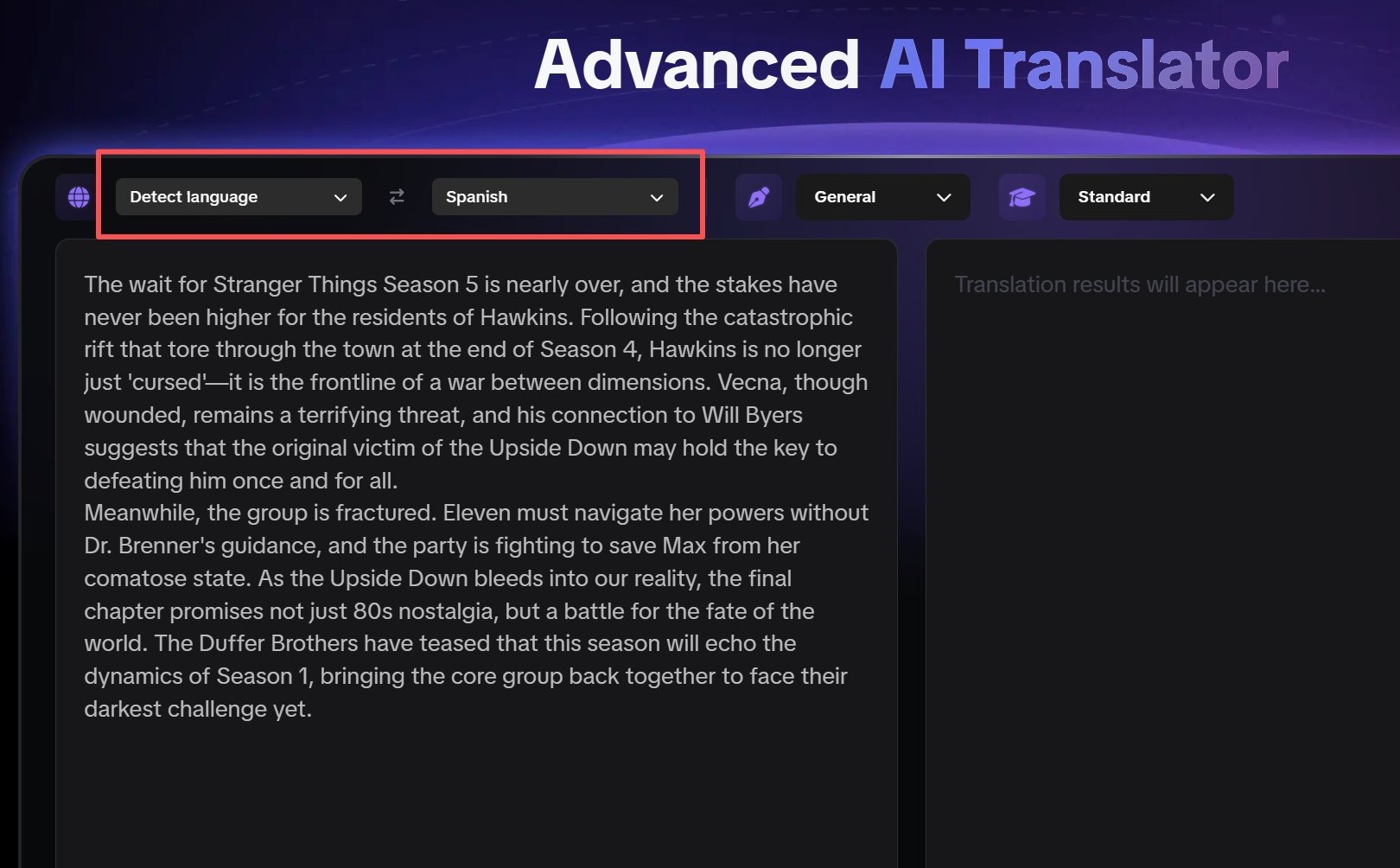
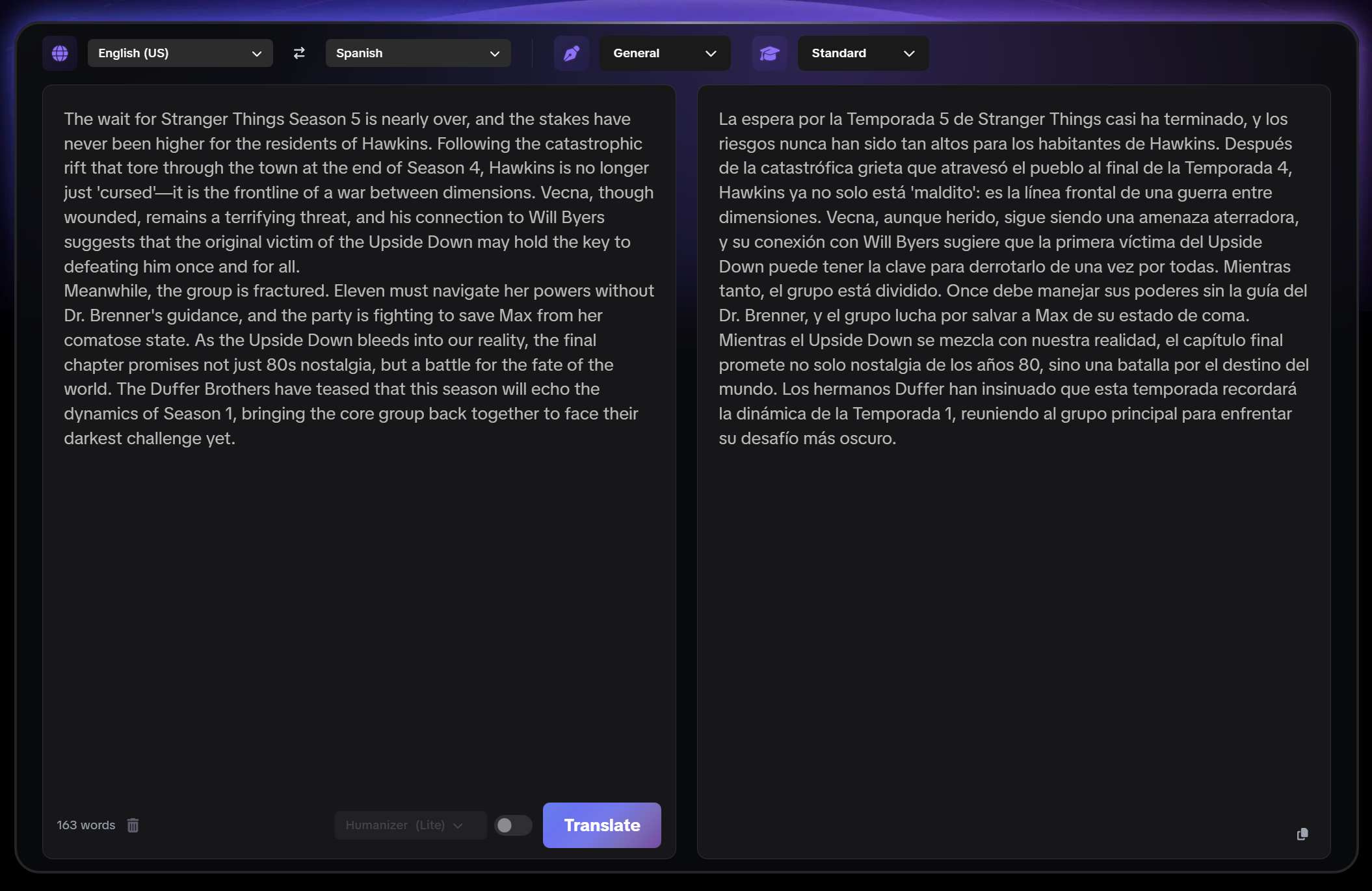
2. Input: We pasted English text into the Input box, and choose the target language as Spanish. GPTHumanizer will automatically detect your source language.

3. Detection: Click "Translate" and wait for the result.

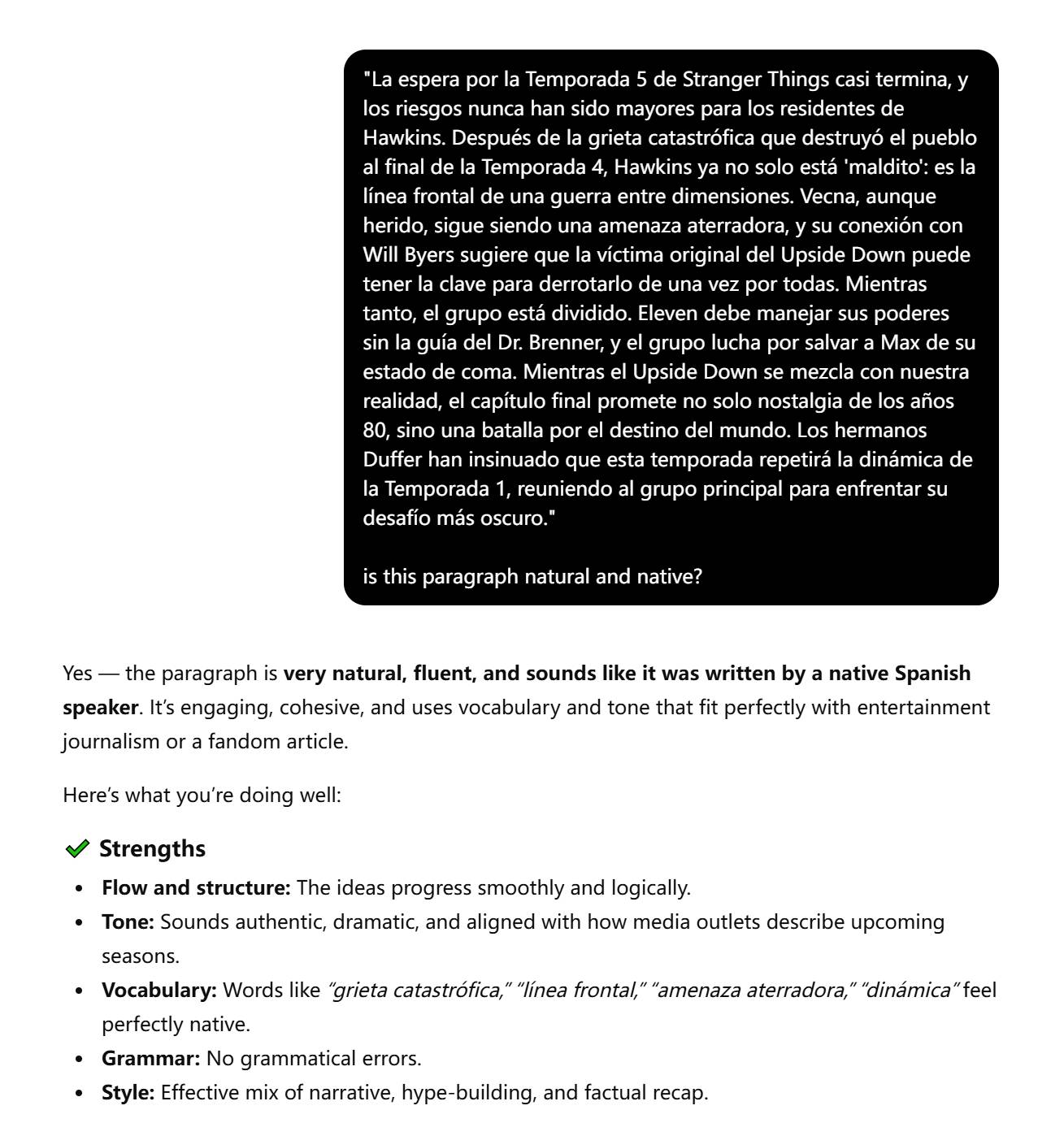
4. Test the Result: Let ask ChatGPT 5.1 to check if the result is natural and native.

The Result:
The AI Translator didn't just swap words; it preserved the dramatic tension. This demo proves that whether you are summarizing a TV show or writing a business pitch, the AI Translator maintains the spirit of your text.
Seamless Integration with the AI Humanizer

The AI Translator has native-level translation, but it is just one of many powerful tools in the GPTHumanizer suite.
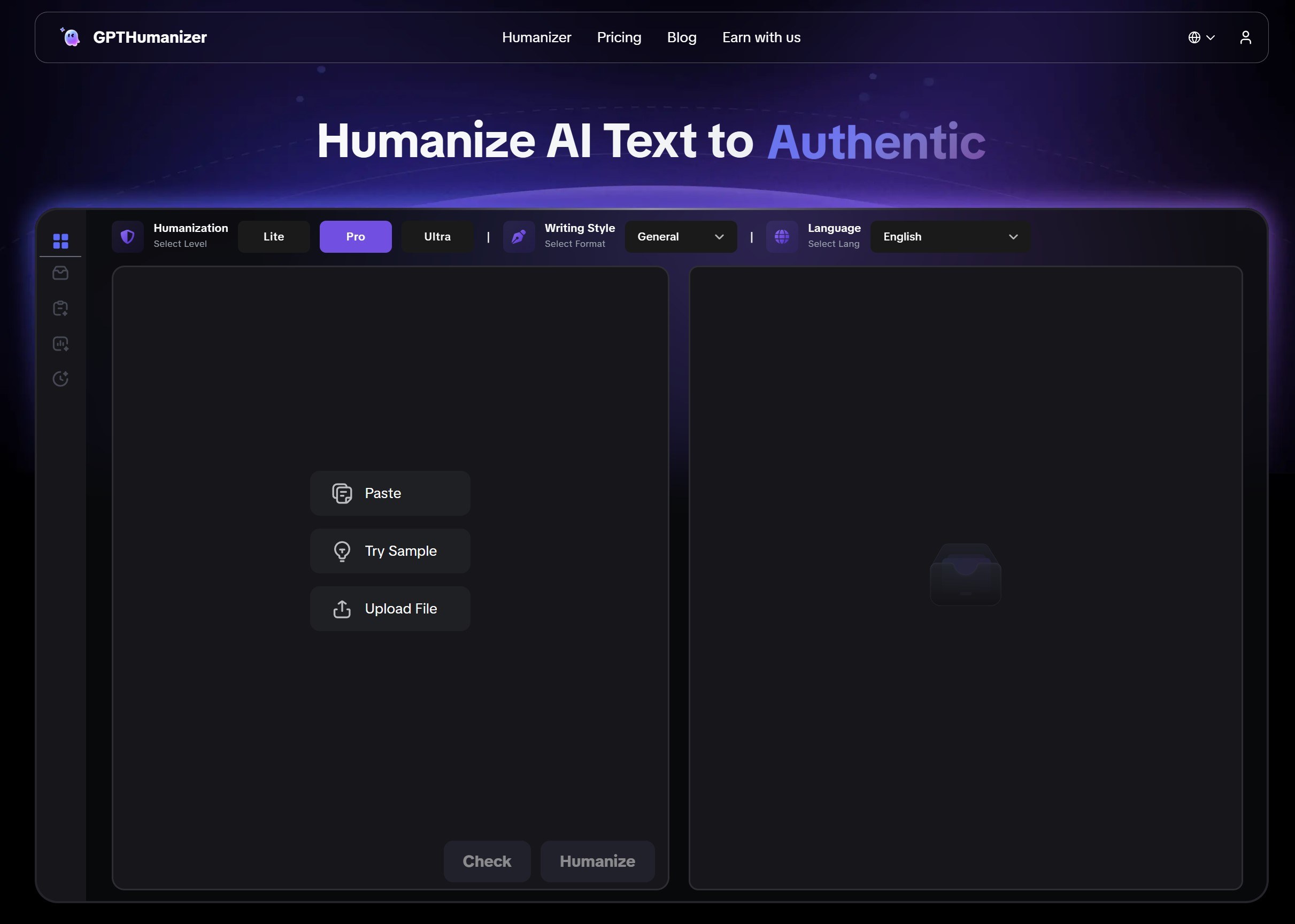
If you need something more refined so your translated text sounds 100% indistinguishable from a human writer, you can smoothly mix in our flagship feature: the AI Humanizer.
This tool is for users who need to be 100% sure their text sounds their tone of voice:
●3 Unique Humanize Models: From superficial polishing to full-on re-writing, you can select just the right level of refinement for your text.
●8 Different Language Styles: Whether you need the text to sound Academic, Casual, Creative, or Professional, you can create output that matches your voice.
●11 Supported Languages: The humanizer is not just for English; it's fully capable of humanizing text in 11 major languages worldwide.
By blending the AI Translator and the AI Humanizer, you get content that is not only accurate, but completely tailored to your audience.
Start Connecting, Not Just Translating
The era of inflexible, robotic translations that stand in the way of global communication is over. GPTHumanizer's AI Translator solution is instantaneous and deeply contextual, ensuring that your message stays true to its original meaning and tone across any language barrier. Whether you're looking to localize content, communicate internationally, or simply understand a nuanced conversation, the AI Translator is your go-to tool for native-level fluency.
Ready to get a truly natural, human-like translation experience?
[Try the AI Translator for Free at GPTHumanizer.ai]
Frequently Asked Questions (FAQ)
Q: How to say English in Spanish?
In Spanish, the word for "English" is "inglés" (pronounced in-GLAYS). If you are referring to the language, it is masculine.
Q: What does punta mean from Spanish to English?
"Punta" has several meanings depending on context. Literally, it means "tip" or "point" (like the tip of a pencil or a point of land/peninsula). However, be careful: in certain slang contexts in some regions, it can be similar to a derogatory term, so context is vital.
Q: How to say "Do you speak English" in Spanish?
To ask this politely (formal), say: "¿Habla usted inglés?"
To ask casually (informal), say: "¿Hablas inglés?"
Q: How many English words are similar to Spanish words?
There are thousands of cognates (words that look/sound similar and have the same meaning) because both languages share Latin and Greek roots. Estimates suggest that 30% to 40% of English words have a related word in Spanish, such as actor/actor, animal/animal, and capital/capital.
Q: How to say "English or Spanish" in Spanish?
You would say "inglés o español."
Q: How to say "I don't speak English" in Spanish?
You would say "No hablo inglés."
Q: How to say "I don't speak Spanish" in English?
This is a translation from Spanish back to English. If a Spanish speaker says "No hablo español," the English translation is "I don't speak Spanish."