
“HY” Meaning in Text: What it mean+Real Chat Examples

Summary
What is HY?
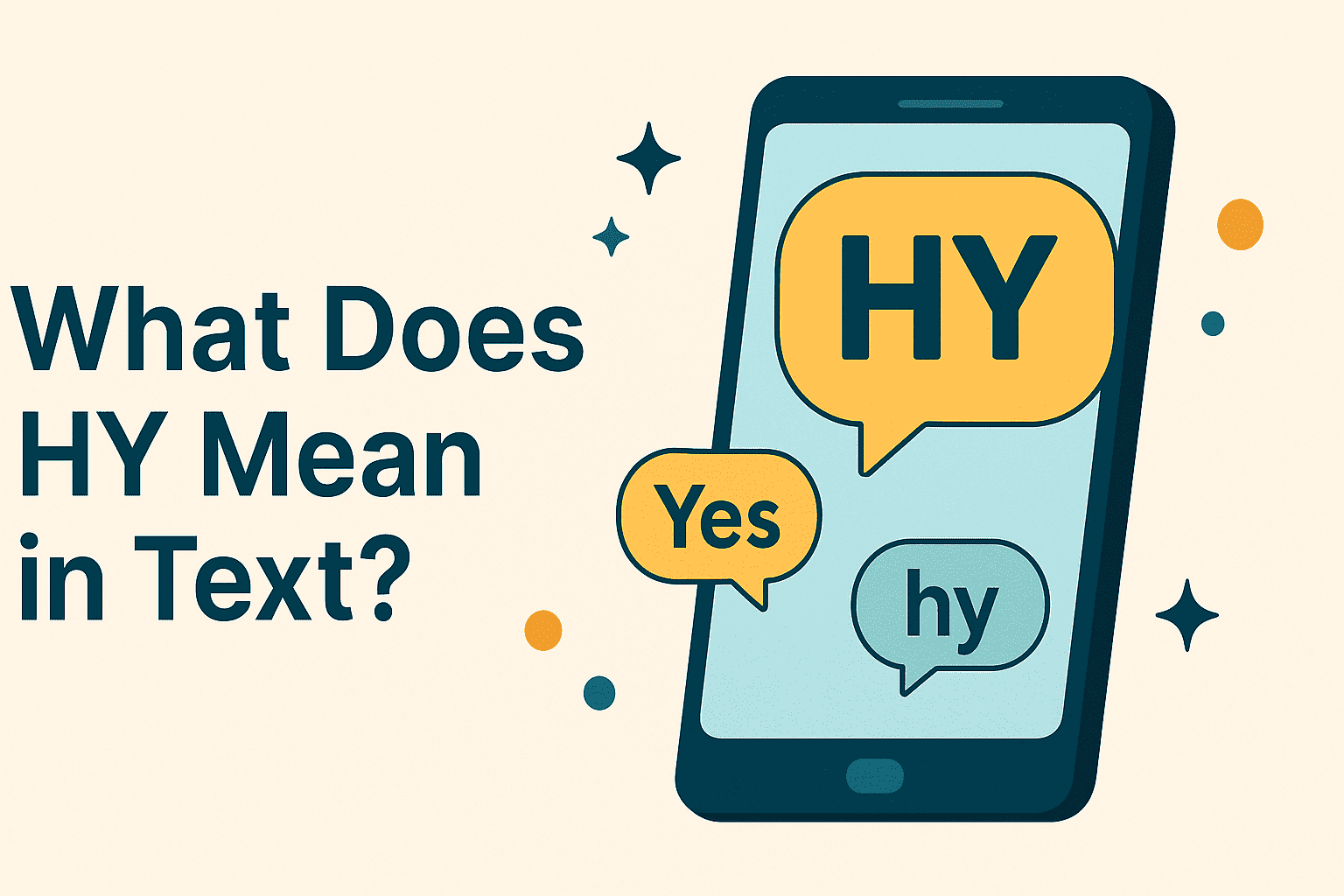
If you're wondering what hy means in text, you probably want a clear answer that works in iMessage, WhatsApp, Snapchat, Instagram, and Discord. Today, people use HY to mean "hell yeah/hell yes," which is just a casual and hyped way to say yes. You might like a plan or want to celebrate some good news. There’s another way people use it though. Some people shorten hi/hey when they type “hy.” People often use it to say hello. Context is everything for these abbreviations (see a general overview of texting abbreviations from Merriam-Webster for reference).
The Two Core Meanings (and When Each Applies)
1) HY meaning in chat: “hell yeah/hell yes” (enthusiastic agreement)
You’ll see HY fired back after good news or an invitation. Examples:
● “We got tickets!” → HY!
● “Game at 8?” → HY, I’m in.
● “Offer came through.” → “HY! Congrats!”
Tone & etiquette: This sense is upbeat and very casual. It fits group chats, friend threads, gaming servers, and celebratory comments. In professional settings, switch to a full phrase like “Yes, sounds good” or “Approved” to keep tone clear and appropriate.
2) “hy” meaning greeting (clipped hi/hey)
When hy appears at the start of a message—often followed by a name or a question—it’s working as a quick hello:
● “hy, are you free this afternoon?”
● “hy Sam, quick question about the slides.”
● “hyyy, you around?” (elongated forms add playfulness)
Tone & etiquette: Friendly and informal. Use it with peers who expect texting shorthand. If stakes are high—client updates, job interviews—prefer “Hi” or “Hello” for clarity and professionalism. For the greeting sense, see Cambridge’s entry for hey as a greeting
Context Decoder: How to Tell HY Meaning in Text
1. Message position
a. Standalone reply to news or an invite → agreement (“hell yeah”).
b. Conversation opener → hy meaning greeting (hi/hey).
2. Neighboring words
a. Action words like go, join, book, buy, ship or a concrete plan → agreement.
b. Small-talk cues like how are you, you free, quick question → greeting.
3. Platform culture
a. Public comments and hype-driven threads often favor the excited “hell yeah” reading.
b. Private DMs with a name or question right after hy meaning informal greeting.
4. Relationship & tone
a. Close friends often use HY as pumped agreement.
b. New contacts are more likely to read shorthand as abrupt—spell it out when unsure.
Copy-Ready Examples
● Agreement: “Launch hit 10k visits—HY!”
● Agreement: “Dinner at 7?” → “HY, see you there.”
● Greeting: “hy, quick question about the brief.”
● Greeting (playful): “hyyy, what’s up?”
Use these as templates in your own messages. If ambiguity is possible, add a clarifier (“HY—count me in” vs. “Hy—got a minute?”).
Style & Etiquette (So You Don’t Sound Abrupt)
● Think about where you are sending the message. It is better to type out full words when using email or a thread that involves multiple people.
● One word can change your answer from an agreement (HY—absolutely yes) to a greeting (Hy—quick question).
● Use abbreviations when necessary. Too many can make you seem rude.
● Try and match the style of the person you are talking to. If they are using full words, you should too.
Related Slang You’ll See Nearby
● HBU — how ’bout you
● HMU — hit me up
● IMO/IMHO — in my (humble) opinion
● NVM — never mind
These live in the same casual register as HY. Use sparingly in formal contexts.
Common Mistakes to Avoid
● Believing HY consistently indicates “yes.” HY meaning informal greeting if it leads off a message and is followed by a question or name.
● Employing HY with formal chats. It can sound fairly unprofessional or overly informal. Insert a full phrase instead.
● Not clarifying confusion. If readers might interpret HY either way, toss in one word of clarification.
People Also Ask — Answered (SEO-Focused FAQ)
When is it appropriate to use the hy meaning greeting?
You should use hy meaning greeting at the very start of a conversation or when addressing someone directly by name (e.g., "hy Sarah, you there?"). Because it is a shorthand for "hi" or "hey," it works best in casual direct messages on platforms like Snapchat or Discord where the tone is informal and the pace of conversation is fast.
What does HY mean in text?
There are two main meanings. One is an excited “hell yeah/hell yes.” The other is a short informal greeting like hi/hey. Look at the context to see which is right.
What does HY mean on Snapchat or Instagram?
HY on Snapchat or Instagram can mean "hell yeah" when responding to good news or plans. It is often an excited reaction. In private messages, especially at the start, HY can be a casual way to say hello
Is HY appropriate for work?
HY is not typically suitable for the workplace due to its informal nature. In professional settings, use “Yes, that works,” “Agreed,” or “Hi [Name]” as appropriate.
HY may appear as “Hy” in brand or technical names, unrelated to texting slang. Context will clarify its meaning in these cases.
Helpful Writing Tip
In text, HY can jump between multiple meanings: reply “hell yeah,” or opener “hi/hey” in DMs. Reference position, context, and platform conventions. When clarity is paramount, full phrase is the gold standard. If you’re refining text of your own for a less stilted tone in messages, posts, bios, and more, consider incorporating a brief, humanizing pass into your writing workflow—tools like GPT Humanizer can help eliminate robotic phrasings while not encouraging academic dishonesty or “gaming” the detectors, keeping the focus on clarity and authenticity.
So to sum it up: if you’re wondering what does hy mean in text, safest default is: reply = ad nauseam yes; opener = greeting.